Showing posts with label Civil War. Show all posts

Saturday, March 15, 2025

Freestone Point on the Potomac River

The Freestone Point, now a tall bluff overlooking the Potomac River, has seen a lot of fighting during the Civil War, shipping of goods, and even entertainment in the form of a casino.

“At the point of the rock,” or Freestone Point, was the translation of the American Indian word Neabsco. Neabsco is an actual road today leading to the Leesylvania State Park. The word describes the land known as Freestone Point. In 18th century maps Freestone Point is indicated as a landmark to river pilots who navigated the Potomac.

During Colonial times Freestone Point was quarried of sandstone which was easily cut and transported on the river as an inexpensive and abundant building material which colonists saw it as “free stone,” hence the name.


Henry Lee and Lucy Grymes Lee used such sandstone as foundation for their manor house and other buildings when they established the Leesylvania Plantation around 1750. (Museum Archives)


The Leesylvania Plantation was located on lands between the Neabsco and Powells Creeks and was used primarily to grow tobacco. The Lee family used fifty-five slaves to grow tobacco from December to September to complete the difficult cultivation process. Ploughing the soil, planting the seeds, watering them and watching them bud, weed them by using a hoe to break the soil, and removing plant pests, was demanding work. After the plants ripened in August, the leaves were cut and hung upside down to dry. After six weeks of drying the leaves were packed into large wooden barrels called hogsheads. These barrels were rolled down the hill to wait for ships to be loaded and sent overseas to the market.

When the river was blockaded during the Civil War, cannons were placed on the bluff, shelling the passing ships below. There is one cannon still positioned in the original location, but it is unclear where this cannon originated.


Gen. Robert E. Lee ordered the blockade of the Potomac River on August 22, 1861. Artillery positions were built along the six-mile-front that would control the sailing channel passage to the Union capital, Washington, D.C. One such position was the land of his ancestral home, Leesylvania, known as Freestone Point.

Freestone Point served as a decoy while the essential batteries were placed down river at Possum Point, Cockpit Point, and Evansport.

The Potomac River channel hosted “A Pacific Paradise on the Potomac” on the S.S. Freestone, a gambling ship, as a recreational resort and casino even though it was illegal to gamble or sell alcohol by the glass in Virginia at that time. The ship was moored in Maryland by what is now the fishing pier. This pier is clearly marked today about 1/3 of the way as Maryland waters. It was not illegal to gamble or sell drinks in Maryland then.

The S.S. Freestone had 200 slot machines on deck, a restaurant on the second deck, and a cocktail lounge on the third deck, decorated in Hawaiian décor with music and dancing. A former steamer, the boat had been turned into a floating casino.

On opening day, July 20, 1957, “live music was provided by Johnny Long and his orchestra, water ballet, water skiing exhibitions, races by sailing craft, fireworks, and a beauty contest to crown the Queen of Freestone Point.”

Walking on the fishing pier today, there is a lot of banter and laughter in Spanish coming from the regular fishermen who come to catch the weekend dinner for their families. Nobody knows the history of the park or the family that donated the land for their enjoyment.

Tuesday, August 15, 2023

Bristoe Station Battlefield

The railroad as it was in 1863

The blazing sun is scorching us in the wide-open field, and we are already drenched in sweat. We can see trees far away and across the road but not close enough to enjoy the shade. The area is covered in thick weeds and native grasses born by the fertile soil.

Our tour guide is in his eighties, a former Navy submariner, tough, witty, intelligent, with an unusual strong voice that carries well in the open space, and extremely knowledgeable of our country’s Civil War history.  Tom is leading us into and around the footsteps of Confederate and Union soldiers who fought, killed, and wounded each other in these fields on that fateful day of October 14, 1863, in the Battle of Bristoe Station.

One of two cannons in the fields

The fight lasted almost two hours, a little less than our drenching two-and-a-half-hour tour. Visitors like us can never understand the actual battle unless we walk in the combatants’ footsteps and feel the terrain even though it may have changed slightly.


Encampment location

When I say, ‘changed terrain,’ I am referring to home construction sites adjacent to the park property. The builders dug a sewer pipe through the battlefield heritage park grounds, land preserved by the Prince William County historical preservation society, following a protracted battle that is ongoing, in their effort to save a few more acres from being developed into a data center and a storage facility, whose acres contain the earthly remains of at least fifty soldiers. God only knows how many shallow graves they had disturbed in the process of digging the sewer line through. Ghosts of soldiers must run rampant at night in the neighborhood homes built around the historical park.


The land of the battlefield was sold several times, including by the farmer who used to plow it; he wanted his daughter to be allowed to build a home in one corner overlooking the busy highway.

Farmer's former home on top of the hill

A local church sold part of the land for $50 million to a developer before it was donated to the Prince William County historical preservation society on the condition that some homes could be built on part of the bordering acreage.


The mile and a half loop through fields and woodlands takes a little over two hours to complete or perhaps longer if the guide, like Tom, is very knowledgeable and likes to talk.


The railroad as it is today in Bristow Station, Virginia

The railroad, used then by Union soldiers, who hid behind the rail’s embankment, is still active today, and, to Tom’s delight, two Amtrak trains and a freight train crossed the track while we were in its vicinity – a veritable show and tell tour.

National Archives portraits of the two generals

Gen. Robert E. Lee (1807-1870), commander of the Confederate States Army, was not feeling particularly well during this battle, still recovering from a previous heart attack, “ordered his Army of Northern Virginia across the Rapidan River near Orange, Virginia in a series of flanking maneuvers to earn a victory over the Union Army.” But Gen. George Mead (1815-1872), who commanded the Army of the Potomac (1863-1865), was able to evade Gen. Lee’s ambush. Gen. Meade’s goal was to make it to Centreville heights before Gen. Lee would be able to intercept him.

“After miles of hard marching and fighting battles at James City, Brandy Station, Jeffersonton and Auburn, the lead elements of Gen. Lee’s army caught up to Gen. Meade at Bristoe Station. On October 14, the stage was set for Gen. Lee’s last chance to attack and gain an advantage over the superior Union Army before it escaped northward to Centreville.” According to Archives, this fight would be Gen. Lee’s last major offensive campaign of the war.

The battle was a definite loss for the Confederates, as they lost three times as many soldiers as the Union.  In “A History of the Guilford Greys,” a quote stands out, “The point from which we started the charge was distinctly marked; at least four and in some cases ten men from each company lying dead or wounded in that line.”

Among the five hundred plus Union soldier casualties, Col. James Mallon of New York stands out as the only Union officer mortally wounded at Bristoe Station, Virginia.

Gen. John Rogers Cooke’s (1833-1891) Confederate Brigade charged toward the railroad, but they were in a foot race with the Union reinforcement which arrived by rail. Reaching the safety of the railroad embankment first, the Union soldiers unleashed a barrage of fire power against Gen. Cooke and his Brigade. The fact that they were positioned on higher ground, without any tree protection, made the Confederates an easier target. A Union soldier remarked that the Confederate soldiers were “mowed down like grain before a reaper.”

The Civil War forced brothers to fight against brothers for the economic interests of a few rich and powerful men. Interestingly, Gen. John R. Cooke’s father was Union Gen. Phillip St. George Cooke. However, Gen. John R. Cooke’s brother-in-law was the Confederate cavalry leader Jeb Stuart. Families and neighbors were split in their allegiance to either the Union or the Confederate side.

The Archive of Bristoe Station battle stated that, “With decimated numbers and no hope to push on, the Confederates had the choice of surrender or retreat. Many chose to make the dangerous dash to safety, while hundreds surrendered along the railroad embankment.”

Along the walk in the fields, Tom led us to a place where the Davis Family Farmstead used to be. Before the Civil War Thomas K. Davis was a Prince William County sheriff and, in 1858, had bought 136 acres on which he built a home, a barn, and outbuildings.

Davis also operated a store in the village of Bristoe Station, today spelled Bristow by decision of U.S. Postal Service. Davis was a supporter of the Union while his neighbors supported the Confederates who, in 1861, established Camp Jones in the area. When the Confederates pulled out of the area in the spring of 1862, they destroyed Davis’s store. When the Union soldiers, under the command of Brig. Gen. Rufus King, arrived soon after, they tore down farmer Davis’s fencing and cut down trees on his property for use in their camps.

Battles raged on his farm in August 1862 and the Davis house was used as a hospital and headquarters for the Federals. The Davis family remained here until the threat of imprisonment by the Confederates in 1863 forced them to flee to Washington. They were thus not present during the Battle of Bristoe Station on October 14, 1863.

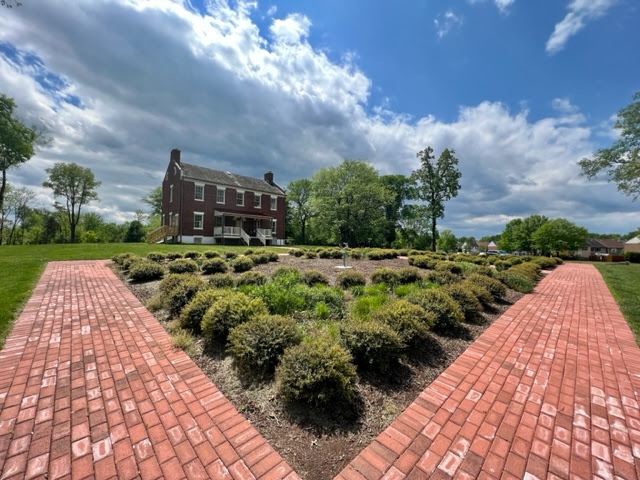
A cannon is resting on top of the hill, not far from the brick house of the recent farmer who owned the land it sits on. The house is now the park’s archives but not yet opened to the public. The historical preservation park acquired the land relatively recently. A large tree gave us a bit of shade on the bench we sat on for a few minutes. The bugs and the bees surrounded us as we looked down to the railroad tracks, farther than the 100-400 ft. range necessary for the muskets, rifles, and cannons to be effective.

As the tour ended and we shook our shoes filled with dirt, drenched in sweat from the 94-degree Fahrenheit heat and the scorching sun, I could not help but think of the misery, pain, and blood spilled that day in the same time frame but in a wet and miserable October. In addition to the wounded, more than 2,000 soldiers on both sides have died that day, young lives snuffed out for the interests of a few.

Note: Photos taken by Ileana Johnson; portraits from National Archives

Friday, April 28, 2023

Liberia House in Manassas, Virginia

Liberia House stands in the middle of a beautiful green pasture, a flower garden, a cemetery, a walking trail with a brook surrounded by woods and an apiary, with buzzing busy bees covered in pollen. The locust trees are just blooming and greening.

The Weir cemetery at the bottom of the hill is shaded by a lugubrious tree in the corner, leaning at a 45-degree angle and exposing its roots like a trailing mantle, delivering the nutrients of plant life. Not even sunshine can make this tree look inviting in this symphony of early spring colors.

If Liberia House could talk, it would enumerate an endless list of famous and ordinary Americans who have walked through its doors: Jefferson Davis, Abraham Lincoln, Gen. P.G.T. Beauregard, Gen. Joseph E. Johnston, Gen. Irvin McDowell, and countless unknown soldiers who were wounded in the Civil War and sought refuge and care in Liberia.

The house was built in 1925 by W. J. Weir on land formerly owned by “King” Carter. It was Gen. Beauregard’s headquarters from May 1861 until after the First Battle of Manassas, July 21, 1861.


According to archives, Jefferson Davis “watched the First Battle of Manassas on July 21, 1861, and then came here to Gen. P.G.T. Beauregard’s headquarters to meet with him and Gen. Joseph E. Johnston before returning to Richmond on July 23. Lincoln came here with his Secretary of War on June 19, 1862, to visit Gen. Irvin McDowell, who was recovering after his horse fell on him.”


During restoration of Liberia, numerous signatures were found on the walls on the second floor, written by Union soldiers stationed here. They wanted to be remembered; that they were alive in that moment in time. A graffiti from March or August 1862, written by Pvt. Adam McKelvey, Co. G. 12th Pennsylvania Infantry Reserve Regiment, can be found among others who signed their names for posterity, knowing that death was stalking them.

Liberia was the place where the Weir family raised their children and grandchildren. The plantation was so vast, it encompassed most of the land of Manassas today. There were slaves in bondage here, and “a beer baron from Alexandria operated a dairy farm on the property.”


An archive photograph from 1862 shows Liberia with an intact kitchen wing on the right. The museum curators believe that it was probably destroyed during the war and never rebuilt.

Liberia’s owners, William James Weir, and Harriet had planted daffodils alongside the front walk of the house. A photograph from March 1862 shows the yellow blooms when the house was occupied by Union troops. The daffodils somehow survived the encampment of two armies amid the Civil War.

The Turberville Memorial Garden today is planted with common plants in Virginia that are supporting pollinators of the current apiary.


William J. Weir complained to Confederate soldiers early in the war about the loss of his fruit trees. In 1863, an edition of Harpers New Monthly Magazine reported that Weir was said to have been ‘shut up in the guardhouse for saying, as he witnessed his fruit trees being made into firewood, that he didn’t know as he would be used any worse by the Yankees than he had been by those who professed to be his friends’.

Private George Bagby of Virginia’s 11th Infantry wrote in 1861 during his time in Liberia: “At night I would walk out in the garden and brood over the possible result of this slow way of making war. The garden looked toward the battlefield. At times I thought I detected the odor of the carcasses, lightly buried there; at others I fancied I heard weird and doleful cries borne on the night wind.” (Museum Archives)


The Weir family owned 2,000 acres of farmland and forest so far from settled areas that it required barns, a dairy, a gristmill, a laundry, a kitchen, slave quarters, a school, a general store, and a post office. The labor to maintain such a vast plantation was provided by “enslaved and white laborers and skilled craftsmen, alongside members of the Weir family.” They lived here for thirty-six years.


During the Civil War, the family was divided. William did not want secession, but his three sons served in the Confederate Army. The family moved to Fluvanna County. Walter inherited the property after his father’s death in 1867 but the farm never returned to its pre-war wealth.


Before the City of Manassas acquired the property in 1986, records show that:

1.      The property owned by William Weir encompassed most of modern-day Manassas (1825-1888) – Library of Congress

2.      Liberia was a dairy farm when owned by Alexandria businessman Robert Portner (1888-1947); the Portners never lived on the property  – Manassas Museum Collection

3.      Liberia was owned by the Breeden family (1947-1986) – Manassas Museum Collection

There is evidence from an ad placed in 1847 in the Alexandria Gazette that William Weir operated the Liberia Mathematical and Classical School on the premises.  A donation to the museum of a math exam with the words at the top of the page, ‘Liberia School,’ became further evidence of the school’s existence.


Walter Weir 

The Weir Cemetery appears too close to the house; that is because it was moved here in 1989 from its original site, Point of Woods East/Lakeside. With the family’s permission, 24 graves and headstones were moved by specialists at the Smithsonian Institution according to the original burial plans and plots. The exhumation revealed that only Walter’s remains were well preserved because he was buried in a cast iron coffin with a glass viewing pane. Walter’s body was so well preserved that forensic analysis revealed that “he died from an infection, likely caused by an abscessed tooth.”

Note:  Museum archive photos are black and white, color photographs: Ileana Johnson April 2023


Wednesday, April 5, 2023

Fredericksburg Flowers

Nurse Woolsey

The verdant fields of Chancellorsville, Virginia, are bursting with wildflowers. The yellows, purple, lavender, white, and pink are delight in the blazing spring sun. It is a humbling experience to walk through the grounds where so many Americans have lost their lives in a Civil War battle won at such great cost, a Confederate pyrrhic victory of sorts, brother fighting against brother. How many cries of agony of the injured or dying soldiers were heard through the gun smoked air and how much innocent blood soaked into the fields surrounding us?

The wildflowers are beautiful every spring and bring to mind the Fredericksburg Flowers. Despite the Civil War doom and gloom, nature sprang to life that spring and with it, its colorful wild flowers. A relief nursing worker from New York, Georgeanna Woolsey, picked wild flowers for a new regiment heading to the front.

“We filled our baskets, trays, and the skirts of our gowns with snow-balls, lemon blossoms, and roses yellow, white, and red. The 8th New York Heavy Artillery was in the column . . . and [we] tossed roses and snowballs in showers over the men. They were delighted . . . . ‘Oh, give me one . . . . I will carry it into the fight for you;’ and another cheerily, -- ‘I will bring it back again.’”

One such happy New York soldier brought the flowers back as promised – he returned three days later to Miss Woolsey as a corpse, wilted Fredericksburg flowers upon his chest.


Thursday, November 21, 2019

The National Museum of Civil War Medicine


Photo: Ileana Johnson 2019
Frederick, MD, a town settled in 1745, is the location of the two-story National Museum of Civil War Medicine. Following the Battles of South Mountain and Antietam, the city of Frederick became one vast hospital with hospital beds in schools, churches, hotels, and any public buildings suitable for use. A photo exists of the interior of the Evangelical Lutheran Church looking like a hospital ward filled with hospital beds.


The museum is important in so many ways because the Civil War was described as a “watershed” in the history of medicine in regards to medical school education, recruiting and enlisting of soldiers, camp life, treatments, drugs, evacuation of the wounded, field dressing stations, field hospitals, and pavilion hospitals.


American medicine prior to the Civil War struggled with the general idea that disease was caused by a bodily poison triggered by a nervous constriction of the small blood vessels. Doctors used sweating, bleeding, cupping, blistering of the skin, and drugs to induce vomiting in order to purge the poison from the body. Bleeding was even used to stop internal hemorrhaging or to fix wounds to the chest. 


Few really believed in sterilization to stop the spread of disease from patient to patient. The [Henry] Craig Microscope was sold as a novelty through the mail, a single-fused lens in a tube mounting. But few understood microorganisms and the spread of disease through contact.


Battlefield first aid kit

Surgeons treated the death wounds, the burning fevers, the wasted bodies, and the broken constitutions and understood the life-long effects of battle – the shattered limbs, the pain, and the life-long physical and mental handicaps.


Surgical instruments and tools

Medicine was not entirely primitive as many are inclined to believe. The soldiers did not just “bite the bullet” in order to withstand surgery. Chloroform and ether were used in low doses in approximately 95 percent of Civil War surgeries in order to render the wounded oblivious to pain. 


Battlefield medicine chest, Museum 

Medicines used to treat diseases or pain included quinine and substitutes, alcohol, mercury-based drugs, creosote, morphine, chloroform, iodine, ether, opium, patent medicines (developed locally, of questionable efficacy and full of alcohol, opium, and mercury), iron supplements, tinctures for pain relief, and homeopathic medicines. Sutlers would sell patent medicines to soldiers or they received them in home packages.


Medicines found in care packages from home

Morphine and opium were used as painkillers and quinine was used to combat malaria. A hospital drug chest on display contained 48 medical containers made of glass and porcelain which were full of different compounded drugs or mixtures used to treat various diseases. A surgeon’s complete operating kit with stainless steel tools was manufactured by “Hernstein & Son of New York,” contracted suppliers for the Union physicians.


Autenrieth medical wagon

In 1864 the Union Medical Board approved the Autenrieth medical wagon for field use. The earlier 1862 medical wagon was improved and the Autenrieth version was presented with “sliding shelves and drawers to hold medicines and supplies as well as a sliding flat work surface that could be pulled out when the wagon was opened.” It held about 77 different drugs and tinctures, hospital stores, 16 surgical instruments, various dressings, furniture, and bedding (blankets and covers). It was a vast improvement over the hospital drug chest with 48 medicines.

It was not uncommon for military surgeons to use their private amputation kits such as the surgical instruments manufactured by Edward F. Snyder of Philadelphia who produced instruments from 1841-1855.


Middleton Goldsmith experimented with bromine to treat hospital gangrene after a severe outbreak in Memphis in 1863. He discovered that the survival rate improved dramatically with the use of bromine. The U.S. Sanitary Commission endorsed the use of bromine immediately and cases diminished in the last years of the war.


Despite the general belief that doctors were simple butchers, the reality is that most Civil War surgeons went to medical school and were trained with an established doctor. They had to pass an exam to serve as a war surgeon. 


Wounds were quite severe due to the new rifle musket technology and the French Minié ball which made repairing the damage impossible due to time constraints and potential deadly infections. For this reason, three out of four surgeries performed were amputation which resulted in nearly half a million soldiers coming out of the Civil War disabled.

Surgeons were often spoken of as “sawbones” due to the large number of amputations performed. Soldiers often reached for their weapons when they saw a surgeon approach.  The damage done by the musket balls called Minié was so devastating that they had no choice but to amputate.

Not all broken limbs were amputated during the war. A fracture box was used to align the broken bones as well as various sizes and shapes of splints on display. 

The .58 caliber rifled musket used in the Civil War was different from the Revolutionary War musket. The cone-shaped bullet had a hollow grooved base that expanded and spun with full force when fired. The accuracy and velocity of these Minié lead bullets did more damage, shattered the bones into many splinters, destroyed the surrounding soft tissue, and the lead remained inside the body.  “Approximately 94 percent of all recorded injuries were caused by the new Minié ball. Seven out of ten injured soldiers were wounded in the arm or leg; two out of ten in the body; and one out of ten in the head or neck.”

Hospital cot - Museum

Orthopedic hospitals were established in the South starting in March 1865 where disabled soldiers were fitted with prosthetics – artificial hands, arms, legs, and cosmetic appliances for facial wounds. In the State of Mississippi, “One-third of the soldiers were killed or crippled during the War. In 1866 one-fifth of the state’s revenue was expended on artificial limbs and for amputees.” (from “God & General Longstreet” by Connelly & Belles)


Field hospitals were usually a barn or a tent, with the barn doors removed to serve as surgical tables. Casualties were triaged into three categories: mortally wounded (abdomen, chest, head), slightly wounded, and surgery candidates. 


Surgeon Z. Boylston Adams of the 32nd Massachusetts Infantry describes the battle: “The front was filled with the sulfurous odor of smoke. There was a constant rattle of musketry mixed with the blood curdling yells and shouts. Artillery shells were exploding in the treetops. Leaves and branches fell about … Minié balls could be heard thudding into the surrounding trees. And so, the field hospital went into operation.”

One famous Confederate surgeon was John Julian Chisolm from Charleston, S.C. “In April 1861, Chisolm treated Union soldiers wounded at Fort Sumter.” He worked during the war in the military hospitals in Richmond.

Mary Edwards Walker, a New York surgeon, received her medical degree from Syracuse Medical College in June 1855. She treated wounded soldiers after the battles of Manassas and Fredericksburg, Virginia. Most of her medical colleagues did not support her when she was assigned with the 52nd Ohio Volunteer Infantry Regiment in January 1864. On April 10, 1864 Walker was captured by Confederate troops, sent to prison in Richmond, and exchanged four months later for a Confederate officer. President Andrew Johnson awarded Walker the Congressional Medal of Honor for Meritorious Service in 1865.


According to the museum archives, prior to the Civil War, the U.S. Army had a 40-bed infirmary in Kansas. A hospital was a poor house where the poor went to die. However, by 1865 the Union Medical Department had 181,000 beds in 187 pavilion style hospitals and the Confederates had a similar number of beds to treat the wounded and the sick.


U.S. hospital railroad cars were retrofitted and used as early as August 1861 to transport the wounded from the battlefield to metropolitan hospital centers. Stretchers were suspended in railroad cars with vulcanized rubber rings in order to provide shock absorbers for a smoother ride and to be able to suspend more stretchers inside a car.


“River boats and later steamships were leased or purchased and refitted as hospital ships at first in the West and later in the East. The City of Memphis carried 11,024 sick and wounded in 33 trips up and down the Mississippi. The D.A. January transported and cared for 23,738 patients during the last 3 years of the war.” They were floating hospitals. 


Nursing care was provided at first by convalescent or non-combatant soldiers until such a time that they were able to return to their regiments. Since 1863 the Union Veteran Reserve Corps supplied nurses, clerks, ward masters, guards and cooks to the general hospital. A famous male nurse, L.A. Thorpe, head nurse at Foster Hospital in New Bern, NC, died of yellow fever in 1864. John C. Sinclair was nurse at Trinity Hospital in Washington, D.C. 


Museum Archives Photo

Walt Whitman visited hospitals in and around Washington, D.C. from December 1862 until December 1865, aiding the sick and wounded soldiers on both sides, talking to them, helping them write letters home, and bringing them small gifts of money, food, writing paper, and scarce items.

Civil War nurse - Museum photo

Slowly, the Catholic sisters and concerned female caregivers gained entrance into hospitals – they cooked, cleaned, bandaged wounds, reading and writing letters. Most “nurses” were anonymous but a few Southern women like Ella King Newsom, Sally Tompkins, Julie Opie Hopkins, and Northern women like Dorothea Dix and Clara Barton became recognized for their efforts. 


President Lincoln invited to the White House one famous nurse, Caroline Johnson, a former slave who nursed in Washington hospitals.


Black slaves built hospitals, cooked in hospital kitchens, and served as laundresses. Richmond, Virginia’s Chimborazo Hospital was built almost entirely by black labor. Often blacks were assigned the task of burying the dead. Three-quarters of the women who nursed at Chimborazo hospital in Virginia were black. “The use of black women in Northern hospital wards was not authorized until 1864.” 


“Susie King Taylor was the best known of the thousands of black Civil War nurses. Her memoir, Reminiscences of My Life in Camp, is the only surviving account of the Civil War experiences of a black nurse.”


Army chaplains assisted with surgeries and comforted the dying. “Of the approximately 165 regiments of the U.S. Colored Troops, only 14 had black chaplains.” Union Army regulations required that regimental officers elected chaplains.


“Mrs. D. H. Hastings, a hospital matron with the 30th U.S. Colored Troops is listed as non-commissioned officer on the regimental muster roll – an extremely rare honor for a woman.”

The Chimborazo hospital in Richmond was like a small city that could serve “more than 8,000 patients in 150 wards, a bakery that produced 10,000 loaves of bread a day, a 400 keg brewery, a newspaper, five ice houses, a soap factory, cultivated fields, and a large herd of livestock.”


Benevolent societies raised money and donated to the U.S. Sanitary Commission for soldiers’ relief - $70 million in four years through contributions from every state and territory in the Union including almost $18,000 from the Sandwich Islands (now Hawaii). In 1861 the U.S. Christian Commission came up with the idea of “coffee wagons” in camp to compete with the “liquor sellers,” the sutlers.

Hospitals provided bands for the entertainment of the wounded, held lectures, concerts, and theatrical performances in addition to medical care. 


One of the Civil War doctors, Lewis Henry Steiner (1827-1892), was a fifth generation of the Steiner family to reside in Frederick, MD. He earned his medical degree from the University of Pennsylvania in 1849. Dr. Steiner was an inspector for the U.S. Sanitary Commission and was present when the Confederate troops entered Frederick. He remained there until the Union troops arrived. He described the Confederate troops on September 8, 1862:


“How the rebels manage to get along no one can tell. They are badly clad. Many of them without shoes. Uncleanliness and vermin are universal. The odor of clothes worn for months, saturated with perspiration and dirt, is intense and all-pervading. They look stout and sturdy, able to endure fatigue, and anxious to fight in the cause they have espoused.”


The Union Army of the Potomac counted 1500 days of service but only 45 were spent in battle. The rest of the time they fought diseases of the camp caused by contaminated water supply, refuse and excrement from humans and animals, fleas, lice, and flies which carried bacteria and viruses to the soldiers and their rations. “Of the nearly 620,000 soldiers who died during the Civil War, two-thirds died of disease and only one third died of wounds,” diarrhea being the number one killer. 


Civil War stretcher 

The Medical and Surgical History of the War of the Rebellion reported 44,558 deaths in the Union Army attributed to diarrhea and dysentery,” the deadliest diseases of the Civil War. Other killer diseases were: erysipelas (streptococcus pyogenes infection at the wound site), hospital gangrene (streptococcal flesh infection which also spreads through contact to nurse, other patients, and doctor), malaria (from mosquito bites), measles, rheumatism (actually RA or “reactive arthritis with joint swelling from rheumatic fever, venereal infections, intestinal disease, dysentery), smallpox, STDs (syphilis and gonorrhea, 182,800 cases among Union troops), typhoid fever (caused by bacterium Salmonella typhi), typhus (bacterium Rickettsia), tuberculosis (bacterial infection known as consumption), and scrofula (tuberculosis of the lymph nodes of the neck). “For some reason, black troops were five times more likely to contract the scrofula.”


According to the Museum, the 65th U.S. Colored Troops (U.S.C.T.) had the most deaths from disease (755) of all Union regiments. The 49th U.S.C.T. lost 465 men to disease compared to 62 killed in action. Ten thousand black sailors served in the Union Navy and 179,000 black soldiers enlisted in the Union Army.


As ghastly as the Civil War was, forcing brother to fight against brother, in the end, a lot of the measures developed to deal with casualties of war became the basis for modern military medicine. For example, the ambulance system developed by Jonathan Letterman is still part of the present-day military evacuation plans.

Medical personnel, just like today, treated the wounded from both sides of the war. A field dressing station, the precursor of our modern first responders, bandaged wounds and administered whiskey for shock and morphine for pain.


Triage was first developed during the Civil War in order to set priorities for treatment of the wounded based on the severity of the injury.


The Civil War used embalming to send home soldiers killed in battle. It was a chemical process that had not been used prior to the Civil War.


The physical and mental impact of 60,000 amputees forced the reunited country to deal with the casualties and establish mental hospitals and care for the veterans.


The condition first diagnosed as nostalgia and irritable heart during the Civil War, shell shock during WWI, became PTSD (Post Traumatic Stress Disorder) today.


Apothecary wagons developed during the Civil War to ensure medication was available to soldiers for treatment.


Water and sewer systems used in pavilion hospitals during the Civil War paved the way for our modern hospitals. Wards were self-contained to minimize the spread of disease.


Modern military medicine has roots in these advancements made during the Civil War and in turn, civilians today benefit from continuing medical developments made in military medicine.

In 1863, the first veterans’ organizations were established in both the North (Grand Army of the Republic) and the South (United Confederate Veterans), with the goal to care for veterans, honor the dead, preserve friendships of those who survived, honor the dead, and provide for widows and orphans.


Soldiers were not the only enlisted in the fight, horses and mules were unwilling beasts of burden and victims in the war. Every cannon and its attached limber (two-wheeled ammunition chest) was pulled by six horses. Six-horse teams also pulled each of the six four-wheeled caissons that carried additional ammunition. An artillery battery consisted of six guns which means that 72 horses were necessary to move the battery. Additional horses were necessary to pull the forge, carry the officers, and be replacements. 


The Army of the Potomac used in 1864 more than 4,000 six-mule team wagons in the Wilderness Campaign, with a total of 56,499 horses and mules that moved the war machine. Veterinary surgeons tended to the animal injuries and tried to maintain the health of their charges. “Large infirmaries were developed to treat horses and mules which were too sick or worn-down to serve the armies.”

A soldier spent most of his day in camp or marching rather than in battle. Marching means that they had to carry extra clothing, personal hygiene items, blankets, tin utensils, a “soldier’s housewife” (items necessary to mend clothing and darning socks:  scissors, needles, thread, patches, pins, buttons, and yarn), items from home, and their weapons. And some also carried items such as pressed flowers, homemade identification tags, business cards (carte de visite), the New Testament, the Book of Common Prayer, and the daguerreotype photo of a loved one.


Most soldiers marched 13 miles daily, carrying 30-50 lbs. of equipment, and such strenuous outlay of energy caused many health problems:  “dehydration, malnutrition, hypothermia, sunstroke, headaches, nerve damage, bone spurs, bone degeneration, muscle soreness and tearing, torn or early loss of cartilage in knees and hips, leaking fluid sacks in knees, joint and back pain, blisters, bruises, lacerations, infections, and chronic cough.”


“War is an organized bore,” one said. But Private Wilbur Fisk of 2nd Vermont wrote, “If a man wants to know what it is to have every bone in his body to ache with fatigue, every muscle sore and exhausted, and his whole body ready to sink to the ground, let him … shoulder his knapsack, haversack, gun and equipment, and make one of our forced marches, and I will warrant him to be satisfied that the duties of war are stern and severe.”


Food focused on “hard-tack” (a hard wheat flour cracker) and salt-cured pork.  Fresh meat and vegetables were issued sometimes in camp and canned food, meat and seafood. Confederate letters describe meals of canned food captured from Union supply trains.  The deficient diet caused major nutritional diseases such as scurvy (vitamin C), night blindness (vitamin A) and malnutrition. There were 46,000 cases of scurvy in Union records.


Coffee, tea, birch beer, and sarsaparilla were available.  The soldier had to grind the beans included in their rations in order to make coffee. Alcohol was not allowed in camp, but officers were not restricted. Sutlers made alcohol available to anyone though just outside the camp.


Tallow and lard were used to make candles for illumination. The “Betty Lamp,” a simple pot filled with oil and a wick, provided light at night. Soldiers entertained themselves in camp with cards, dice, and playing baseball. 


After the bombardment at Fort Sumter in Charleston, S.C. in April 1861, President Lincoln called for 75,000 ninety-day volunteers to squash the rebellion. Companies were organized with 100 volunteers; ten companies formed a regiment; the volunteers chose officers, one regimental surgeon, and two assistant surgeons. 


Johnny Clem, Museum photo
The average volunteer soldier was 25 years old, but Curtis King of 37th Iowa Infantry was 80 years old. Boys younger than 18 served as musicians, stretcher-bearers, nurses, ships boys, and even soldiers. Avery Brown of the 31st Ohio Infantry and Edward Black of the 21st Indian Infantry were 8 years old. At the age of 10, Johnny Clem ran away from home and became a drummer in the Union Army. He enlisted at 12, fought in several battles, was captured and briefly jailed by Confederate soldiers.


Women served in the Civil War, with a documented number of over 300 Union and Confederate females serving disguised as men. This happened because physical examination was often superficial or nonexistent in the rush to gain more recruits for the war. Many joined the army already seriously sick with bronchitis, fevers, TB, STDs, etc.


Soldier’s clothing was made of rough-hewn wool in the North and a mixture of cotton, linen, and wool in the South. The material was itchy and of poor quality and did not last long. Soldiers wore softer underwear to prevent itching. When uniforms wore out, they put on civilian shirts and clothes, even in battle. Shoes did not last long due to long marches.


The Medical and Surgical History of the War of the Rebellion recorded the staggering numbers of enlistment and the final tally of combatants who were killed, injured, and died from their wounds and disease:

Union Army Enlistment 2,893,304                                   Confederate Army Enlistment 1,317,035
Battlefield deaths               110,070                                   Battlefield deaths                          94,000
Death from Disease            224,586                                  Death from Disease                     164,000       
Death from Accidents in the Union Army        24,872 (suicides were also included in this number)

A high percentage of soldiers on both sides died from gunshot wounds (94%). Artillery fire killed 5.5% of them and 0.4% of men perished from sabre or bayonet. 

The final death toll percentage of soldiers fighting their own countrymen in the Civil War was 12.4% (Union) and 19.6% (Confederates). 

The museum was a somber place to reflect on our country’s history forgotten by so many.


Monday, September 16, 2019

Antietam 157 Years After the Bloody Battle

We drove one overcast and pleasant day to Antietam National Battlefield in Sharpsburg, MD, 157 years since the bloodiest battle took place. We stopped on the way to see the Washington Monument Park, taking the minor Zittelstown Road. The paved road narrowed to one lane, flanked by old buildings leaning from age, rust, and neglect and surrounded by so much collected junk overcome by wild vegetation that I expected rabbits to jump from the tall grasses and weeds. 


The hilly landscapes seemed deserted of humans. Yards and old homes were jutting walls and porches right at the edge of the twisted and narrow road. It looked like a higher being had decided to throw up ratty barns and homes in a landscape of noble and historical decrepitude.


Gen. Lee decided to take a stand on September 15, 1862 at Sharpsburg, Md, when he learned that Harpers Ferry, WV, had fallen. 


Sharpsburg was a 100-year old community with 1,200 residents. As William Snakenberg, a private from the 14th Louisiana, wrote, “That night we lay in line of battle behind a small brick church called the Dunkers Church, situated on the Hagerstown Turnpike, with arms, and ready to move at any moment.” 


On September 16, 1862, after Gen. McClellan had obtained a copy of Gen. Lee’s operations plan, Special Order 191, Union troops crossed Antietam Creek and engaged Gen. Lee’s left army at 6 p.m. The battle of Antietam took place on September 17, 1862 at dawn and lasted 12 hours, ending around 6 p.m.
Counting both sides, almost 100,000 soldiers were engaged in battle; 23,000 were reported dead, wounded, or missing. It is not definitive who won the battle, but the Union Army held the field. McClellan did not chase Lee’s retreating army and, as a result, he was relieved of his duty later by President Lincoln.


The Union leadership in the battle consisted of the following generals: George B. McClellan, Joseph Hooker, Joseph K.F. Mansfield, Edwin V. Sumner, and Ambrose E. Burnside.


The Confederate leadership was comprised of generals Robert E. Lee, Thomas “Stonewall” Jackson, James Longstreet, Daniel H. Hill, and Ambrose P. Hill.


The Dunker Church, built ten years earlier by “pacifist German Baptists Brethren became a focal point for Union attacks the morning of the battle.” The window frames of the original church were preserved with names and initials of soldiers carved onto the windowsills. The front pew and table are the only ones left from the original furniture.


Window ledge at Dunker Church engraved by one Henry Winters from New York

The 24-acre cornfield experienced the bloodiest fighting in U.S. history when Hooker’s and Mansfield’s Union soldiers fought Jackson’s Confederates for three hours. “Many regiments on both sides were cut to pieces. Hays’ Louisiana Brigade suffered over 60-percent casualties in 30 minutes.” It was poignant to watch a John Deere combine harvest corn on the same fields which had been soaked by the blood of brothers and fertilized by their corpses 157 years ago.


Cornfields today

In the West Woods more than 2,000 Union soldiers were killed or wounded in a mere 20 minutes. The North Woods saw the fight and Union attack led by Gen. Hooker who had spent the night on the Poffenberger farm.  In the East Woods there was fighting the night before the battle, a veritable volley of musket bullets. The Lower Bridge (Burnside Bridge) was held for three hours by 500 Confederate soldiers before Gen. Burnside and his Union soldiers captured it and were able to cross the Antietam Creek. The huge sycamore tree at the end of the bridge is still standing today – an early witness to history when it was just a young sapling.


Burnsides Bridge

The Sunken Road or Bloody Lane, a farm lane, experienced three hours of intense fighting between 2,200 Confederate soldiers and 10,000 Union forces held at bay. The fighting fell back to Piper Farm but the Union “had suffered too many casualties to pursue their advantage.”
William Childs, surgeon with the 5th New Hampshire Infantry said in October 1862, “When I think of the battle of Antietam, it seems so strange. Who permits it? To see or feel that a power is in existence that can and will hurl masses of men against each other in deadly conflict – slaying each other by the thousands… is almost impossible. But it is so – and why, we cannot know.”

Surgeon Charles Dunn, when he saw the number of bandages, lanterns, and food that Clara Barton had brought to his Antietam hospital, he nicknamed her “The Angel of the Battlefield.” Clara gave help to the wounded on both sides. The battle created “one vast hospital” as one Hagerstown newspaper wrote and a legion of amputees from the 17,000 wounded soldiers.


George Allen, a Union soldier, vividly described, “Comrades with wounds of all conceivable shapes were brought in and placed side by side as thick as they could lay, and the bloody work of amputation commenced.” Such was a field hospital back then – many fatalities were the result of disease acquired after medical care, not from actual battlefields.


The existence of 500 cannons, most of them 1,200 pounds of bronze barrels, created an atmosphere that most would describe as “artillery hell” on earth. Confederate artillery batteries were positioned on the bluff in the proximity of the Visitor Center today.


Mumma Farm today

Samuel and Elizabeth Mumma’s Farm was set on fire deliberately by Confederate soldiers who were ordered to burn it to prevent its use by Union sharpshooters. Samuel Mumma’s family had fled to safety before the battle. They tried to collect $10,000 in damages from the U.S. government at the time but were turned down and, according to the guides, referred to Confederate authorities for collection of damages. 


No civilians were killed in the horrible 12-hour battle because civilians took shelter in basements, caves, and nearby churches.  But they suffered for years and some have died from disease carried by some of the 80,000 soldiers who stayed for six weeks in their small community. 


In addition to extensive property damage, the small town of Sharpsburg found their homes, barns, and churches converted into more than 100 hospitals in dire need of supplies: food, clothes, blankets, bandages, and firewood. Their formerly fertile corn fields were now graves for almost 4,000 thousand fallen soldiers.

Union soldiers buried the bodies of both friends and foes.  The deceased found their hurried resting place in single or in shallow mass trenches. Photographer Alexander Gardner took pictures of the battlefield burials which he named “Graves of Federal soldiers at Burnside Bridge” and “Federal buried, Confederate unburied, where they fell.” Nobody had time to measure them for coffins or prepare them for a proper burial.


Roulette Farm today

William Roulette, whose farm was occupied by the troops, wrote: “The battle caused considerable destruction of property here. My nearest neighbor lost his house and barn by fire [Samuel Mumma]. I lost three valuable horses and sheep, hogs, poultry, vegetables, and indeed everything eatable we had about the house so that when we came back, we were obliged to bring provisions with us.” 


Following the Battle, the Roulette’s house and barn were utilized as hospitals for the wounded and 700 dead soldiers were buried hastily in their farm fields. Roulette continued, “Our youngest died since the battle, a charming little girl twenty months old, Carrie May – just beginning to talk.” She died of typhus.


Mumma Cemetery and Farm today

Not far from the farm is the Mumma Cemetery. Aside from local family members interred here, there are also veterans of other wars who were buried in this cemetery until the turn of the 20th century.  In 1870 the Mumma family deeded interest in this burial ground to local families so that “neighbors who suffered from war and came together to rebuild their community, now rest together in this peaceful enclosure.”


Some of the farm buildings still standing date back to 1760s and archeological digs had found in their proximity trash buried in the early 1800s which gave ample evidence of the life in these parts at that time.


The soldiers left behind letters and diaries, weapons, clothing, and whatever personal items and equipment they may have carried in order to record for posterity the bloodiest battle of a four-year civil war which defined our nation.
Captain James Hope of the 2nd Vermont Infantry, sketched the Battle of Antietam as he experienced it and, after the war, he painted panoramic works of art based on his sketches.

Alexander Gardner photograph
Museum Archives

Alexander Gardner took photographs of the fallen soldiers two days after the battle showing scenes of unimaginable death, like Hope’s painting.


A Bible from the Dunker Church was plundered by Sergeant Nathan Dykeman of the 107th New York Infantry. He brought it back to New York with him and kept it until his death in 1903. At that time, his sister gave it to the veterans of the regiment who returned to the church 41 years after the battle.


There is a photograph of President Lincoln, taken by Alexander Gardner a few weeks after the battle, speaking to General George McClellan, commander of the Union forces at Antietam. Because McClellan did not chase and destroy Gen. Robert E. Lee’s battered army as President Lincoln desired, he relieved McClellan of his command. McClellan challenged Lincoln for the presidency in 1864 but he lost to the war president.


The last unmarked battlefield burial was discovered in October 2008 on the historic David R. Miller farm.  A visitor in the park found bone fragments and a piece of leather at the mouth of a groundhog burrow.  Upon closer scrutiny, 24 different bone fragments from the skull, legs, and feet were unearthed. In addition, seven coat buttons, 3 New York State Excelsior and 4 U.S. general service, and New York State cuff buttons, state-issue for coat or jacket, and a Union waist belt plate with leather still attached to the back, were found. The remains of the soldier were reburied with full military honors on September 17, 2009 at the Saratoga National Cemetery.


“Twenty men received Medals for their gallantry on the Battlefield of Antietam. Three medals were awarded for action during the Battle of South Mountain on September 14, 1862. Among the recipients were Private Samuel C. Wright, 29th Massachusetts Infantry and First Lieutenant George W. Hooker, 4th Vermont Infantry.  “Hooker advanced alone and on horseback into the Confederate lines and captured more than one hundred southern soldiers and a Confederate battle flag.” Wright was involved in 30 battles and was wounded five times, assailing the Confederate position at Sunken Road.


Memorial to Ohio regiment

Memorial to Mississippi regiment

The Antietam National Battlefield is hallowed ground, a place of national reflection and remembrance. Monuments erected by different organizations, memorializing different regiments, are scattered across the fields where they fought and held positions.


Fieldwork in battlefield archeology led to discoveries and evidence of lines of fighting and how the armies were positioned and the direction they fired. Bullets, shell fragments, intact, unfired bullets dropped when loading guns helped them map the battlefield. Armies used a variety of weapons and ammunition and it was thus possible to identify the exact location of units and the firing lines. Artifacts were flagged, tagged, and GPS-ed.  


Antietam National Cemetery

The Antietam National Cemetery was dedicated in 1867 when disinterred Union soldiers were reburied there. President Andrew Johnson, seven governors, and more than 10,000 people attended the event. The Confederate soldiers were re-interred at three national cemeteries in the Maryland area, Fredrick and Hagerstown among them.


In 1933 the War Department transferred the battlefield to the National Park Service which has preserved the area with care to maintain the same roads, fields, forests, and houses in order to keep the landscape close to its September 1862 appearance. At the time, Civil War veterans were part of the Antietam Battlefield Board, which was established to research and guide the early preservation efforts. Through land acquisitions by different groups, the Antietam National Battlefield has grown from the original 65 acres to more than 3,000 acres by 2012.

Harvesting in progress on September 16, 2019

The fertile fields of corn and soybean have been enriched by the blood of brothers fighting brothers and the monuments stand testament to the fact that the events of that fateful day should never disappear from our history books or fade from collective memory because on that day, when thousands have sacrificed for what they believed in, America forever changed.