Showing posts with label Maryland. Show all posts

Thursday, November 21, 2019

The National Museum of Civil War Medicine


Photo: Ileana Johnson 2019
Frederick, MD, a town settled in 1745, is the location of the two-story National Museum of Civil War Medicine. Following the Battles of South Mountain and Antietam, the city of Frederick became one vast hospital with hospital beds in schools, churches, hotels, and any public buildings suitable for use. A photo exists of the interior of the Evangelical Lutheran Church looking like a hospital ward filled with hospital beds.


The museum is important in so many ways because the Civil War was described as a “watershed” in the history of medicine in regards to medical school education, recruiting and enlisting of soldiers, camp life, treatments, drugs, evacuation of the wounded, field dressing stations, field hospitals, and pavilion hospitals.


American medicine prior to the Civil War struggled with the general idea that disease was caused by a bodily poison triggered by a nervous constriction of the small blood vessels. Doctors used sweating, bleeding, cupping, blistering of the skin, and drugs to induce vomiting in order to purge the poison from the body. Bleeding was even used to stop internal hemorrhaging or to fix wounds to the chest. 


Few really believed in sterilization to stop the spread of disease from patient to patient. The [Henry] Craig Microscope was sold as a novelty through the mail, a single-fused lens in a tube mounting. But few understood microorganisms and the spread of disease through contact.


Battlefield first aid kit

Surgeons treated the death wounds, the burning fevers, the wasted bodies, and the broken constitutions and understood the life-long effects of battle – the shattered limbs, the pain, and the life-long physical and mental handicaps.


Surgical instruments and tools

Medicine was not entirely primitive as many are inclined to believe. The soldiers did not just “bite the bullet” in order to withstand surgery. Chloroform and ether were used in low doses in approximately 95 percent of Civil War surgeries in order to render the wounded oblivious to pain. 


Battlefield medicine chest, Museum 

Medicines used to treat diseases or pain included quinine and substitutes, alcohol, mercury-based drugs, creosote, morphine, chloroform, iodine, ether, opium, patent medicines (developed locally, of questionable efficacy and full of alcohol, opium, and mercury), iron supplements, tinctures for pain relief, and homeopathic medicines. Sutlers would sell patent medicines to soldiers or they received them in home packages.


Medicines found in care packages from home

Morphine and opium were used as painkillers and quinine was used to combat malaria. A hospital drug chest on display contained 48 medical containers made of glass and porcelain which were full of different compounded drugs or mixtures used to treat various diseases. A surgeon’s complete operating kit with stainless steel tools was manufactured by “Hernstein & Son of New York,” contracted suppliers for the Union physicians.


Autenrieth medical wagon

In 1864 the Union Medical Board approved the Autenrieth medical wagon for field use. The earlier 1862 medical wagon was improved and the Autenrieth version was presented with “sliding shelves and drawers to hold medicines and supplies as well as a sliding flat work surface that could be pulled out when the wagon was opened.” It held about 77 different drugs and tinctures, hospital stores, 16 surgical instruments, various dressings, furniture, and bedding (blankets and covers). It was a vast improvement over the hospital drug chest with 48 medicines.

It was not uncommon for military surgeons to use their private amputation kits such as the surgical instruments manufactured by Edward F. Snyder of Philadelphia who produced instruments from 1841-1855.


Middleton Goldsmith experimented with bromine to treat hospital gangrene after a severe outbreak in Memphis in 1863. He discovered that the survival rate improved dramatically with the use of bromine. The U.S. Sanitary Commission endorsed the use of bromine immediately and cases diminished in the last years of the war.


Despite the general belief that doctors were simple butchers, the reality is that most Civil War surgeons went to medical school and were trained with an established doctor. They had to pass an exam to serve as a war surgeon. 


Wounds were quite severe due to the new rifle musket technology and the French Minié ball which made repairing the damage impossible due to time constraints and potential deadly infections. For this reason, three out of four surgeries performed were amputation which resulted in nearly half a million soldiers coming out of the Civil War disabled.

Surgeons were often spoken of as “sawbones” due to the large number of amputations performed. Soldiers often reached for their weapons when they saw a surgeon approach.  The damage done by the musket balls called Minié was so devastating that they had no choice but to amputate.

Not all broken limbs were amputated during the war. A fracture box was used to align the broken bones as well as various sizes and shapes of splints on display. 

The .58 caliber rifled musket used in the Civil War was different from the Revolutionary War musket. The cone-shaped bullet had a hollow grooved base that expanded and spun with full force when fired. The accuracy and velocity of these Minié lead bullets did more damage, shattered the bones into many splinters, destroyed the surrounding soft tissue, and the lead remained inside the body.  “Approximately 94 percent of all recorded injuries were caused by the new Minié ball. Seven out of ten injured soldiers were wounded in the arm or leg; two out of ten in the body; and one out of ten in the head or neck.”

Hospital cot - Museum

Orthopedic hospitals were established in the South starting in March 1865 where disabled soldiers were fitted with prosthetics – artificial hands, arms, legs, and cosmetic appliances for facial wounds. In the State of Mississippi, “One-third of the soldiers were killed or crippled during the War. In 1866 one-fifth of the state’s revenue was expended on artificial limbs and for amputees.” (from “God & General Longstreet” by Connelly & Belles)


Field hospitals were usually a barn or a tent, with the barn doors removed to serve as surgical tables. Casualties were triaged into three categories: mortally wounded (abdomen, chest, head), slightly wounded, and surgery candidates. 


Surgeon Z. Boylston Adams of the 32nd Massachusetts Infantry describes the battle: “The front was filled with the sulfurous odor of smoke. There was a constant rattle of musketry mixed with the blood curdling yells and shouts. Artillery shells were exploding in the treetops. Leaves and branches fell about … Minié balls could be heard thudding into the surrounding trees. And so, the field hospital went into operation.”

One famous Confederate surgeon was John Julian Chisolm from Charleston, S.C. “In April 1861, Chisolm treated Union soldiers wounded at Fort Sumter.” He worked during the war in the military hospitals in Richmond.

Mary Edwards Walker, a New York surgeon, received her medical degree from Syracuse Medical College in June 1855. She treated wounded soldiers after the battles of Manassas and Fredericksburg, Virginia. Most of her medical colleagues did not support her when she was assigned with the 52nd Ohio Volunteer Infantry Regiment in January 1864. On April 10, 1864 Walker was captured by Confederate troops, sent to prison in Richmond, and exchanged four months later for a Confederate officer. President Andrew Johnson awarded Walker the Congressional Medal of Honor for Meritorious Service in 1865.


According to the museum archives, prior to the Civil War, the U.S. Army had a 40-bed infirmary in Kansas. A hospital was a poor house where the poor went to die. However, by 1865 the Union Medical Department had 181,000 beds in 187 pavilion style hospitals and the Confederates had a similar number of beds to treat the wounded and the sick.


U.S. hospital railroad cars were retrofitted and used as early as August 1861 to transport the wounded from the battlefield to metropolitan hospital centers. Stretchers were suspended in railroad cars with vulcanized rubber rings in order to provide shock absorbers for a smoother ride and to be able to suspend more stretchers inside a car.


“River boats and later steamships were leased or purchased and refitted as hospital ships at first in the West and later in the East. The City of Memphis carried 11,024 sick and wounded in 33 trips up and down the Mississippi. The D.A. January transported and cared for 23,738 patients during the last 3 years of the war.” They were floating hospitals. 


Nursing care was provided at first by convalescent or non-combatant soldiers until such a time that they were able to return to their regiments. Since 1863 the Union Veteran Reserve Corps supplied nurses, clerks, ward masters, guards and cooks to the general hospital. A famous male nurse, L.A. Thorpe, head nurse at Foster Hospital in New Bern, NC, died of yellow fever in 1864. John C. Sinclair was nurse at Trinity Hospital in Washington, D.C. 


Museum Archives Photo

Walt Whitman visited hospitals in and around Washington, D.C. from December 1862 until December 1865, aiding the sick and wounded soldiers on both sides, talking to them, helping them write letters home, and bringing them small gifts of money, food, writing paper, and scarce items.

Civil War nurse - Museum photo

Slowly, the Catholic sisters and concerned female caregivers gained entrance into hospitals – they cooked, cleaned, bandaged wounds, reading and writing letters. Most “nurses” were anonymous but a few Southern women like Ella King Newsom, Sally Tompkins, Julie Opie Hopkins, and Northern women like Dorothea Dix and Clara Barton became recognized for their efforts. 


President Lincoln invited to the White House one famous nurse, Caroline Johnson, a former slave who nursed in Washington hospitals.


Black slaves built hospitals, cooked in hospital kitchens, and served as laundresses. Richmond, Virginia’s Chimborazo Hospital was built almost entirely by black labor. Often blacks were assigned the task of burying the dead. Three-quarters of the women who nursed at Chimborazo hospital in Virginia were black. “The use of black women in Northern hospital wards was not authorized until 1864.” 


“Susie King Taylor was the best known of the thousands of black Civil War nurses. Her memoir, Reminiscences of My Life in Camp, is the only surviving account of the Civil War experiences of a black nurse.”


Army chaplains assisted with surgeries and comforted the dying. “Of the approximately 165 regiments of the U.S. Colored Troops, only 14 had black chaplains.” Union Army regulations required that regimental officers elected chaplains.


“Mrs. D. H. Hastings, a hospital matron with the 30th U.S. Colored Troops is listed as non-commissioned officer on the regimental muster roll – an extremely rare honor for a woman.”

The Chimborazo hospital in Richmond was like a small city that could serve “more than 8,000 patients in 150 wards, a bakery that produced 10,000 loaves of bread a day, a 400 keg brewery, a newspaper, five ice houses, a soap factory, cultivated fields, and a large herd of livestock.”


Benevolent societies raised money and donated to the U.S. Sanitary Commission for soldiers’ relief - $70 million in four years through contributions from every state and territory in the Union including almost $18,000 from the Sandwich Islands (now Hawaii). In 1861 the U.S. Christian Commission came up with the idea of “coffee wagons” in camp to compete with the “liquor sellers,” the sutlers.

Hospitals provided bands for the entertainment of the wounded, held lectures, concerts, and theatrical performances in addition to medical care. 


One of the Civil War doctors, Lewis Henry Steiner (1827-1892), was a fifth generation of the Steiner family to reside in Frederick, MD. He earned his medical degree from the University of Pennsylvania in 1849. Dr. Steiner was an inspector for the U.S. Sanitary Commission and was present when the Confederate troops entered Frederick. He remained there until the Union troops arrived. He described the Confederate troops on September 8, 1862:


“How the rebels manage to get along no one can tell. They are badly clad. Many of them without shoes. Uncleanliness and vermin are universal. The odor of clothes worn for months, saturated with perspiration and dirt, is intense and all-pervading. They look stout and sturdy, able to endure fatigue, and anxious to fight in the cause they have espoused.”


The Union Army of the Potomac counted 1500 days of service but only 45 were spent in battle. The rest of the time they fought diseases of the camp caused by contaminated water supply, refuse and excrement from humans and animals, fleas, lice, and flies which carried bacteria and viruses to the soldiers and their rations. “Of the nearly 620,000 soldiers who died during the Civil War, two-thirds died of disease and only one third died of wounds,” diarrhea being the number one killer. 


Civil War stretcher 

The Medical and Surgical History of the War of the Rebellion reported 44,558 deaths in the Union Army attributed to diarrhea and dysentery,” the deadliest diseases of the Civil War. Other killer diseases were: erysipelas (streptococcus pyogenes infection at the wound site), hospital gangrene (streptococcal flesh infection which also spreads through contact to nurse, other patients, and doctor), malaria (from mosquito bites), measles, rheumatism (actually RA or “reactive arthritis with joint swelling from rheumatic fever, venereal infections, intestinal disease, dysentery), smallpox, STDs (syphilis and gonorrhea, 182,800 cases among Union troops), typhoid fever (caused by bacterium Salmonella typhi), typhus (bacterium Rickettsia), tuberculosis (bacterial infection known as consumption), and scrofula (tuberculosis of the lymph nodes of the neck). “For some reason, black troops were five times more likely to contract the scrofula.”


According to the Museum, the 65th U.S. Colored Troops (U.S.C.T.) had the most deaths from disease (755) of all Union regiments. The 49th U.S.C.T. lost 465 men to disease compared to 62 killed in action. Ten thousand black sailors served in the Union Navy and 179,000 black soldiers enlisted in the Union Army.


As ghastly as the Civil War was, forcing brother to fight against brother, in the end, a lot of the measures developed to deal with casualties of war became the basis for modern military medicine. For example, the ambulance system developed by Jonathan Letterman is still part of the present-day military evacuation plans.

Medical personnel, just like today, treated the wounded from both sides of the war. A field dressing station, the precursor of our modern first responders, bandaged wounds and administered whiskey for shock and morphine for pain.


Triage was first developed during the Civil War in order to set priorities for treatment of the wounded based on the severity of the injury.


The Civil War used embalming to send home soldiers killed in battle. It was a chemical process that had not been used prior to the Civil War.


The physical and mental impact of 60,000 amputees forced the reunited country to deal with the casualties and establish mental hospitals and care for the veterans.


The condition first diagnosed as nostalgia and irritable heart during the Civil War, shell shock during WWI, became PTSD (Post Traumatic Stress Disorder) today.


Apothecary wagons developed during the Civil War to ensure medication was available to soldiers for treatment.


Water and sewer systems used in pavilion hospitals during the Civil War paved the way for our modern hospitals. Wards were self-contained to minimize the spread of disease.


Modern military medicine has roots in these advancements made during the Civil War and in turn, civilians today benefit from continuing medical developments made in military medicine.

In 1863, the first veterans’ organizations were established in both the North (Grand Army of the Republic) and the South (United Confederate Veterans), with the goal to care for veterans, honor the dead, preserve friendships of those who survived, honor the dead, and provide for widows and orphans.


Soldiers were not the only enlisted in the fight, horses and mules were unwilling beasts of burden and victims in the war. Every cannon and its attached limber (two-wheeled ammunition chest) was pulled by six horses. Six-horse teams also pulled each of the six four-wheeled caissons that carried additional ammunition. An artillery battery consisted of six guns which means that 72 horses were necessary to move the battery. Additional horses were necessary to pull the forge, carry the officers, and be replacements. 


The Army of the Potomac used in 1864 more than 4,000 six-mule team wagons in the Wilderness Campaign, with a total of 56,499 horses and mules that moved the war machine. Veterinary surgeons tended to the animal injuries and tried to maintain the health of their charges. “Large infirmaries were developed to treat horses and mules which were too sick or worn-down to serve the armies.”

A soldier spent most of his day in camp or marching rather than in battle. Marching means that they had to carry extra clothing, personal hygiene items, blankets, tin utensils, a “soldier’s housewife” (items necessary to mend clothing and darning socks:  scissors, needles, thread, patches, pins, buttons, and yarn), items from home, and their weapons. And some also carried items such as pressed flowers, homemade identification tags, business cards (carte de visite), the New Testament, the Book of Common Prayer, and the daguerreotype photo of a loved one.


Most soldiers marched 13 miles daily, carrying 30-50 lbs. of equipment, and such strenuous outlay of energy caused many health problems:  “dehydration, malnutrition, hypothermia, sunstroke, headaches, nerve damage, bone spurs, bone degeneration, muscle soreness and tearing, torn or early loss of cartilage in knees and hips, leaking fluid sacks in knees, joint and back pain, blisters, bruises, lacerations, infections, and chronic cough.”


“War is an organized bore,” one said. But Private Wilbur Fisk of 2nd Vermont wrote, “If a man wants to know what it is to have every bone in his body to ache with fatigue, every muscle sore and exhausted, and his whole body ready to sink to the ground, let him … shoulder his knapsack, haversack, gun and equipment, and make one of our forced marches, and I will warrant him to be satisfied that the duties of war are stern and severe.”


Food focused on “hard-tack” (a hard wheat flour cracker) and salt-cured pork.  Fresh meat and vegetables were issued sometimes in camp and canned food, meat and seafood. Confederate letters describe meals of canned food captured from Union supply trains.  The deficient diet caused major nutritional diseases such as scurvy (vitamin C), night blindness (vitamin A) and malnutrition. There were 46,000 cases of scurvy in Union records.


Coffee, tea, birch beer, and sarsaparilla were available.  The soldier had to grind the beans included in their rations in order to make coffee. Alcohol was not allowed in camp, but officers were not restricted. Sutlers made alcohol available to anyone though just outside the camp.


Tallow and lard were used to make candles for illumination. The “Betty Lamp,” a simple pot filled with oil and a wick, provided light at night. Soldiers entertained themselves in camp with cards, dice, and playing baseball. 


After the bombardment at Fort Sumter in Charleston, S.C. in April 1861, President Lincoln called for 75,000 ninety-day volunteers to squash the rebellion. Companies were organized with 100 volunteers; ten companies formed a regiment; the volunteers chose officers, one regimental surgeon, and two assistant surgeons. 


Johnny Clem, Museum photo
The average volunteer soldier was 25 years old, but Curtis King of 37th Iowa Infantry was 80 years old. Boys younger than 18 served as musicians, stretcher-bearers, nurses, ships boys, and even soldiers. Avery Brown of the 31st Ohio Infantry and Edward Black of the 21st Indian Infantry were 8 years old. At the age of 10, Johnny Clem ran away from home and became a drummer in the Union Army. He enlisted at 12, fought in several battles, was captured and briefly jailed by Confederate soldiers.


Women served in the Civil War, with a documented number of over 300 Union and Confederate females serving disguised as men. This happened because physical examination was often superficial or nonexistent in the rush to gain more recruits for the war. Many joined the army already seriously sick with bronchitis, fevers, TB, STDs, etc.


Soldier’s clothing was made of rough-hewn wool in the North and a mixture of cotton, linen, and wool in the South. The material was itchy and of poor quality and did not last long. Soldiers wore softer underwear to prevent itching. When uniforms wore out, they put on civilian shirts and clothes, even in battle. Shoes did not last long due to long marches.


The Medical and Surgical History of the War of the Rebellion recorded the staggering numbers of enlistment and the final tally of combatants who were killed, injured, and died from their wounds and disease:

Union Army Enlistment 2,893,304                                   Confederate Army Enlistment 1,317,035
Battlefield deaths               110,070                                   Battlefield deaths                          94,000
Death from Disease            224,586                                  Death from Disease                     164,000       
Death from Accidents in the Union Army        24,872 (suicides were also included in this number)

A high percentage of soldiers on both sides died from gunshot wounds (94%). Artillery fire killed 5.5% of them and 0.4% of men perished from sabre or bayonet. 

The final death toll percentage of soldiers fighting their own countrymen in the Civil War was 12.4% (Union) and 19.6% (Confederates). 

The museum was a somber place to reflect on our country’s history forgotten by so many.


Tuesday, July 1, 2014

My Visit to The National Museum of Health and Medicine

National Museum of Health and Medicine
Photo: Ileana Johnson, June 2014
Surgeon General William A. Hammond founded the Army Medical Museum in 1862 to “document the effects of war wounds and disease on the human body.” Its staff has conducted pioneering research on infectious diseases, pathology, and medical techniques. Museum researchers “contributed to discovering the cause of yellow fever and developing a vaccination for typhoid fever.” The Army Medical Museum was designated a Registered National Historic Landmark under the Historic Sites Act of August 21, 1935.

The National Museum of Health and Medicine is housed in its new facility in Silver Springs, Maryland. Originally located in the former Walter Reed Medical Center in Washington, D.C., the museum focused on army medicine and artifacts from the Civil War and subsequent world wars, including the wars in Vietnam and Korea.

I visited the museum a few years ago in its former location and was struck about the lugubrious atmosphere, the smell of decay, mold, and formaldehyde. The museum today is modern and antiseptic, “dedicated to preserving, collecting, and interpreting the artifacts, specimens, photographs and documents that chronicle the history and practice of medicine over the centuries.

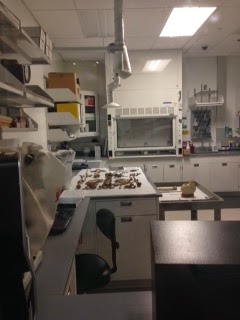
Specimen storage area
Photo: Ileana Johnson, June 2014
The National Museum of Health and Medicine’s collection contains more than 25 million specimens, slides, photographs, artifacts, artworks, and documents that accumulated since 1862 after the “Army Medical Department ordered that ‘all specimens of morbid anatomy’ be gathered from Civil War battlefields.” Many specimens are kept in temperature-controlled storage in the wall to wall sliding bins and can be observed behind a huge glass enclosure. A forensic teaching laboratory, visible through large windows, contained skeletal remains and the tools necessary for identification.

Instruments such as chisels, ossicle hooks, rotary burs, cerebral exploratory cannula, mastoid gouge, Volkmann’s spoon, periosteal elevator, searcher and scoop, retractors were Macewen’s instruments used in 1894 for brain operations.

A few tools used by Surgeon General William A. Hammond (circa 1860) were displayed. During the Civil War era surgeons performed cranial trephination, a procedure which involved drilling a circular hole into the skull to relieve intracranial pressure after head wounds. Of the 220 operations performed by Union surgeons, 50 percent were successful.

Today surgeons have an array of tools, equipment, and materials at their disposal to detect brain injury, including the life-saving titanium mesh which allows for bone-regrowth and does not interfere with MRIs (magnetic resonance imaging).

Cross-sections of the brain on display revealed subarachnoid hematomas (bleeding of smaller vessels) and subdural hematomas (bleeding of larger vessels). Such injuries can occur from a single blow to the head or from an explosion.

Photo: Ileana Johnson 2014
One fascinating specimen floating in a vertical cylinder was a brain connected to the spinal cord, dating back to 1935. It showed the complexity of the bundles of axons (nerve fibers) that supply information from the brain to torso, arms, and legs.

Biomedical engineers developed devices and processes such as artificial kidneys used in dialysis, prosthetic limbs, and tissue engineering of the skin. On display was a Drake artificial leg dating back to 1866 and a Kolff-Brigham artificial kidney. Manufactured by Edward Olson of Massachusetts, this artificial kidney could cleanse the blood of one or two patients daily, passing arterial blood through cellophane tubing wrapped around a drum, which rotated through a 100-liter chemical bath.

More than 45,000 Civil War soldiers from both sides survived amputations and were fitted with prosthetics. Many soldiers did not survive their bullet and shrapnel wounds unless their limbs were amputated.  

The bloodiest year of the Civil War was 1864. Ninety percent of the more than 200,000 soldiers who died during the Civil War were victims of small arms fire. The museum’s collection documents the devastating injuries of almost 500 soldiers with shattered bones, holes in the skull, and horrible wounds. William Tod Helmuth said in 1873, “The effects are truly terrible; bones are ground almost to powder, muscles, ligaments, and tendons torn away… loss of life, certainly of limb, is almost an inevitable consequence.”

Bones with osteomyelitis
Photo: Ileana Johnson, June 2014
At that time, surgeons were provided by the U.S. military with “more than 100 different instruments used in complicated procedures ranging from bullet extraction to reconstructive surgery. Standard medical supplies included 97 different drugs produced by nearly two dozen manufacturers under government contract.”

“More than 400,000 soldiers from both sides died from disease during the war, almost twice as many as were killed in action. Open latrines, unclean water, stifling tents and rotting foods turned crowded camps into breeding grounds for sickness.” Dysentery and childhood diseases such as chickenpox, measles, and mumps were deadly in those unsanitary conditions. Osteomyelitis (bone infections) and gangrene spread easily through hospitals.

The Army Medical Museum had preserved by the end of the Civil War more than 4,000 skeletal specimens with various gunshot, blunt force, and sharp force injuries. Wet tissue specimens were also preserved in alcohol. Medical records with treatment and surgical procedures were also carefully catalogued, including drawings, photographs, letters, reports, and diaries of nurses. The data was compiled into a six-volume Medical and Surgical History of the War of the Rebellion. The archives and the specimens are still used in scientific studies today.

The museum holds the largest collection of pathological gross tissue in the world and some samples are quite rare. Microscopic sections of tissue, cells, or blood identify abnormalities, disease, and deformities.

Among various microscopes dating from 1853 and 1881, the Zeiss microscope used by Walter Reed in 1898-1899 and the 1665 London microscope used by Robert Hooke of the Royal Society stand out. Robert Hooke wrote Micrographia and was the first person to use the word “cell” in microscopic structures.

U.S. Army Major Water Reed (1851-1902) has saved countless lives through his research into the causes of typhoid and yellow fever and the discovery that yellow fever is transmitted by mosquitoes. Maj. Reed was the curator of the Army National Museum and professor of clinical microscopy at the Army Medical School (now the Walter Reed Institute of Research).

The first physician to be inducted in the Hall of Fame for Great Americans at New York University in 1963, Dr. Walter Reed left an indelible mark in the U.S. history of medicine. In 1936 The Walter Reed Medal was established in his honor, to be awarded annually for “meritorious achievement in tropical medicine research.”

Walter Reed General Hospital was founded in 1909 and remained the Army’s premier treatment center for more than a century until it was merged in 2011 with the National Naval Medical Center in Bethesda, Maryland. The merger formed Walter Reed National Military Medical Center.  On my last museum visit at the Washington, D.C. location, I spoke with a couple of soldiers injured in Iraq who were recuperating and were taking a stroll on the grounds.

Amputated Elephantiasis leg
Photo: Ileana Johnson, June 2014
The most gruesome non-military specimen was the amputated leg of a 27-year old in 1894 who had Elephantiasis and lived with this leg for 12 years. In response to a parasite, the leg became inflamed and scar tissue formed which accumulated over time. Elephantiasis is still prevalent in some tropical areas today.

One interesting display contained two bits of blackened cloth expectorated by a colonel 18 weeks after he had been shot in the chest when fragments of his uniform were lodged within his body.

The bullet fragment extracted from Abraham Lincoln’s head post-mortem is barely visible under a tiny round glass container.

Capt. Henry Wirz was arrested at the end of the war for crimes committed while commanding the Confederate prison at Camp Sumter in Andersonville, Georgia. During his watch, 13,000 of the 45,000 Union soldiers died in captivity from brutality. Wirz denied the charges by claiming a debilitating injury to his right arm.  After his execution on November 10, 1865, an autopsy discovered that he had full use of his right arm.

Museum working lab
Photo: Ileana Johnson, June 2014
A  hydrocephalic baby, conjoined twins, fetal skeletons, a cross-section of a black lung, a liver with cirrhosis, diseased kidneys, a kidney with scarlet fever, carcinomas in the kidney, spina bifida, a human hairball from the stomach, and a scrotum with Elephantiasis are some of the non-war medical specimens on display.

A portion of the museum is dedicated to identifying human remains both military and civil through:

-        -  DNA evidence (after 1994 the military collects blood samples from service members and archives them in a repository; mitochondrial DNA can be extracted 125 years after death)

-        -  Anthropological evidence (analyzing skeletal remains, fingerprinting, dental records, and nuclear DNA)
 

-          Age-at-death-estimation (based on age-related microscopic changes of bone)

-          Dental evidence (based on existing dental records)

-          Virtual autopsy (3-D images provide a detailed map of injuries and foreign objects in the body)

After September 11, 2001, 38 pouches and 13 boxes of human remains were flown to Dover Air Force Base for examination by the Office of the Armed Forces Medical Examiner. By November 16, 2001, “all but five of the 189 deceased had been scientifically identified.”

Trauma Bay II in Balad, Iraq, located on a scarred concrete slab, had saved more lives between 2003-2007 than any other war theater hospital, with a survival rate of 98 percent, and served as a testing ground for innovative technologies that relieved pain and suffering for patients who were evacuated when stabilized. This floor is now preserved in the museum.

Lt. Col. Chester Buckenmaier III pioneered the use of a peripheral nerve block while deployed at the Balad hospital. While the patient remained conscious, his goal was to manage pain, keeping a patient alert during a 5-hour flight. From September 2001 through September 2007, more than 44,000 severely wounded patients were flown from Balad to Landstuhl Regional Medical Center near Ramstein, Germany, within 24-72 hours after arriving at Balad.

Arm and foot prosthetics
Instruments on display show the progression from wood and ivory to steel, the choice metal in the age of sterilization, and the sophistication of tools that developed to enable surgeons to perform more complex surgeries.

Military medicine protected combatants against enemy weapons, infectious diseases (vaccinations against tropical diseases, drugs to fight malaria, typhoid, and dengue fever, starting with the Continental Army), psychological stresses, and environmental forces such as high altitudes and extreme hot and cold temperatures (preventing dehydration, altitude sickness). From the early strips of linen cloth or lint packing and protecting wounds, modern bandages are hemostatic, helping wounds to clot while protecting against infection.

Civil War Prosthesis
Photo: Ileana Johnson, June 2014
After WWI, rehab became part of military medicine. The primitive prostheses of mid-1800s were replaced by bionic limbs that replicate the functioning of the lost limbs. Thirty facial and skull reconstructions were documented during the Civil War such as suturing the soft tissues of eyelids, nose, and mouth. Private Carleton Burgan had his entire face reconstructed by Dr. Gurdon Buck in 1863 during a seven month period at New York City’s Hospital. A gangrenous ulcer on his tongue destroyed his upper mouth, palate, right check, and right eye.

Doctors today at the 3-D Medical Applications Center at Walter Reed National Military Medical Center in Bethesda, Maryland, create 250-400 3-D anatomical models and custom implants annually.

WWII hygiene poster
Photo: Ileana Johnson, June 2014
On a quick trip to the bathroom before departure, I discovered four WWII posters produced by the Army Medical Museum during its campaign to educate service members about personal hygiene, STDs, and infectious diseases.

I left with a sense of disappointment that had nothing to do with the museum. Although I saw ample evidence of how well our servicemen are cared for on the battle field and immediately afterwards in surgery and rehab, I know how inadequately veterans are treated medically once they come home and retire, how rationed and often substandard their care is.

Author’s Note: The data, photographs, and quotes used in this article can be found in the National Museum of Health and Medicine in Silver Springs, Maryland.

© Dr. Ileana Johnson Paugh