Showing posts with label silver. Show all posts

Thursday, July 8, 2021

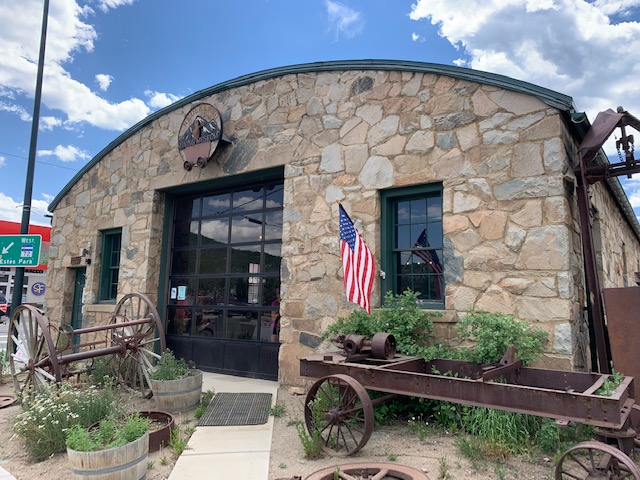
The Mining Museum in Nederland, Colorado

On a dry but hot Colorado June day, we drove to Nederland, one of Boulder County’s mountain jewels, past the Barker Meadow Reservoir with its deep blue waters.

The winding road carved between rock peaks and the Boulder Creek eventually took us to the tiny hamlet of less than 1,500 inhabitants. I could only imagine how cold, slippery, and right down impassable the road must be at times in wintertime. 

We were on a quest to visit the Mining Museum and the century-old carousel with its beautiful figures carved by hand by a Vietnam veteran. 


The one room museum had displays inside and out, rusting in the elements, a close-up look at the lives and history of the miners who lived, worked, and died in this area. Opened by the Nederland Area Historical Society, the museum was purchased by the county in the fall of 2012.


The hard rock mining days in Boulder County during the 19th and the early 20th centuries were brought home by the huge boulders lining the modern highway, at times perched seemingly precarious above our heads, cutting through the mountains. 

Boulder County’s history for the first 75 years was tied to mining, the leading industry in a barely populated area. The first gold strike in 1859 on Gold Hill brought more explorers and more discoveries of gold and silver. The boom-and-bust cycles of mining through the early 20th century opened newly discovered strikes, followed by abandonment when the ores were exhausted. It took one ton of rock and back breaking work to deliver one ounce of pure gold. 

Prospectors, working under unimaginably harsh conditions, would take their ore to the assay office whose employees would determine if individual prospectors “struck it rich.” Using heat and chemicals to test the ore, the assayer would deliver the good or the bad news to the prospector about the percentage of precious minerals found in the miner’s rock finds. These miners had migrated to the Wild West to become part of the 19th century hard rock mining boom. 

Museum Archives photo

Among the rusting equipment sitting inside and outside the building, one can see one of the few surviving Panama Canal steam shovels. Miners used tools like helmets with lamps, bells, trams, and rare mining claim maps to find their “gold.” But the real gold crown jewel was the steam-powered shovel, one of the largest in the world at the time. It scooped tons of dirt while helping canal workers in Panama to build bridges, roads, and drains close to the waterway.

The museum displays blacksmithing tools, maps and documents, ore samples, hand, and pneumatic drills, mine trams, maps, and documents from the 1860s to the present.

The Mining Museum is home to a 1923 Bucyrus 50-B steam shovel whose epic move was chronicled on The History Channel's Mega Movers. Of the 25 steam shovels that helped build the Panama Canal, only this one survives, and it is fully operational, weighing at 130,000 pounds and rated at 75 tons. The 1923 Bucyrus Model 50-B was returned to California, then Denver, and finally was donated to the town of Nederland in 2005. The rest were scrapped for metal in Panama.

According to historical records, 534 Bucyrus and Bucyrus-Erie 50-B shovels were built between 1923 and 1939. “They were among the largest tracked steam shovels in the world at that time. Until 1932, most were steam powered and moved on railroad tracks. In 1923, crawler tracks were added to the 50-B model, creating the first heavy duty, 360-degree rotation mobile shovels.”

The shovel was donated by Steve and Laurel Higgins to the Nederland Mining Museum on October 21, 2005. “This national treasure links a historic engineering achievement, the industrial revolution of the United States, local history of Colorado mining, and good old fashioned hard work by two brothers trying to achieve the American dream. Today it is one of the largest operating shovels in the United States.” Nederland Area Historical Society (nederlandmuseums.org)

Transported to Rollinsville by Roy and Russell Durand, this amazing steam shovel was used at the Lump Gulch Placer, six miles south of Nederland, until 1978.

Hard rock mining is extremely difficult. The rock was blasted with dynamite, the smaller pieces shoveled into buckets and carts, hauled out of the mine, then processed by a mill, ground into a powder, then chemicals were used to separate the valuable ore, usually gold and silver, from the waste rock, and then smelted into bars. These chemicals were poisonous for the environment. One troy ounce of gold was usually extracted from a ton of rock.

The miners used single- or double-jacking methods, holding a steel drill in one hand and a hammer in the other. After each strike, “the miner turned the drill a quarter turn to reposition the cutting edge.” In competitions, a miner could swing a hammer 90 times a minute, that is how strong they were. In double-jacking, one miner would hold and turn the drill and the other swung the hammer.

According to the Mining Museum, the following ores were mined/found in Boulder County:

-          Galena (lead ore)

-          Chalcopyrite (copper ore)

-          Lepidolite (lithium ore)

-          Barite (barium ore)

-          Petzite/Coloradoite/Hessite (gold/mercury/silver ore)

-          Mica

-          Sphalerite (zinc ore)

-          Gold (old ore)

-          Molybdenite (molybdenum ore)

Tungsten (“heavy stone” in Swedish), a rare metal with the highest melting point of all metallic elements, was mined in Nederland, at the time considered the tungsten capital of the world in the early 1900s. Tungsten is used for lightbulbs, TV tubes, steel alloys; tungsten carbide is used in drill bits, high-speed cutting tools, and mining equipment. 

WWI required a lot of tungsten which raised its price from $5 per unit to $105 and the town of Tungsten grew to 3,000 people in a sparsely populated area, and it became the richest town of its size in Colorado. According to the archives, “peak production in 1916 generated $4 million in revenue. Barker Dam had been built to provide power to the mills.  The end of WWI put a stop to the tungsten mining.”

Gold mining in the area took place from the mid-1800s to mid -1900s. Clear Creek was dredged with Eleanor #1 and Eleanor #2 on the historic Arapahoe Bar between 1904 and 1907 by the National Dredging Company (led by Herman J. Reiling); it was environmentally disastrous as the dredges left behind ruined fertile bottom soils forever.  The dredges scooped the rich soil from the riverbed and sifted out the “flour gold.” The “flour gold” was too fine for the technology of that time to be able to recover all gold from the soil of Arapahoe Bar. Golden, Colorado farmers refused to sell any more land to the company.

Silver was found with gold, copper, lead, or zinc and was a major operation in the Mines. But the market crashed in 1893 and the silver boom ended. Silver is used for jewelry, electronics, silverware, photography, finance, and investment.

The assay office took the miner’s rock finds to determine how much precious gold and silver were mixed in with other metals. The entire process, described by the museum archives, was quite complicated:

-          Crushing (the rock was pulverized like salt; a “chipmunk crusher” transformed the rock to pea-size, then a muller ground it to rock flour)

-          Splitting (separated the sample with a riffle splitter)

-          Weighing (a precision balance weighed exactly 29.167 grams of the sample)

-          Firing (the sample was poured and melted at 2000 degrees into a ceramic cup called a “crucible” to create certain chemical reactions, i.e., lead fuses with gold and silver)

-          Pouring into a mold (the lead dropped at the tip of the mold and the “slag” sat on top; the mold looked like a cornbread baking tray)

-          Cupellation (the lead button was put into a “cupel,” a small cup made of bone ash, and heated; during heating, the molten lead oxidized back to litharge and was absorbed by the bone ash; a small bead of molten gold and silver were left)

-          Parting (silver was dissolved using nitric acid, and only gold was left)

-          Final weighing (gold was weighed and converted into ounces per ton, thus determining the value of the ore find)

Miners spent most of their days underground, away from precious sunlight, and it was essential that they had good lighting in the tunnels. They used oil wick cap lamps, carbide lamps (invented in 1900, they burned acetylene gas produced by mixing water and calcium carbide), candlesticks, safety lamps, and electric lights. Safety lamps, invented in 1815 in England, reduced gas explosions. The electric lights were the safest. Thomas Edison invented a battery-powered electric light in 1914 which gave the miners 12 hours of lighting and could be recharged at the end of each shift.

Driving by the closed mines, one wonders what became of the families whose livelihoods depended on such hard and dangerous labor, devoid of sunlight, with fathers and sons toiling underground like moles to extract metals from the rocks. We could never genuinely appreciate the sacrifice these men made to provide society with metals like tungsten, silver, and gold.


Wednesday, November 4, 2020

Gold and Silver Coins Stored as Bullion in India During Roman Times


Gold and silver have a tremendous store of value and portability and it can increase value over time; a small amount can purchase anything during any period. Paper currency, on the other hand, can fall victim to corrupt governments, the lack of faith in them, and the disastrous monetary policy governments engage in such as printing money continuously, causing runaway inflation.

Gold and silver prices have fluctuated in the upward direction lately, responding to the economic uncertainty, the out-of-control printing of money to defray the economic losses due to the unnecessary and panicked COVID-19 -19 lockdowns around the world, and the political instability and violence in the U.S. ginned up by the radical left for the last four years.

In 1775 Roman gold and silver coins were found buried in southern India. Since Indians could not spend these monies in their respective economies, it was assumed that the buried cache of coins was derived from trade.  But what would the Indians do with such Roman coins since they could not be spent in their economy? Historians assumed that the only possible explanation would be that the Indian merchants were storing the gold coins as bullion.

Alexander the Great (336-323 B.C.) first connected the Mediterranean world with India. The usual land routes used before were prevented by the Parthian Empire of Persia. The merchants started using the sea to avoid the harsher land crossing and those who would stand in the way of their trade, including highway robbers.

Hippalus, a Greek merchant, is alleged to have discovered in the first century B.C. how to use the southwest monsoon to sail to and from India. For forty days in July and August, merchants who knew how the monsoon winds blew, sailed from Arabian ports to the Malabar ports in India’s southwestern coast. In December and January, having completed their trades, merchants returned via the Red Sea or the Persian Gulf to the Mediterranean Sea. According to historians, trade links were made with Sri Lanka, Burma, Malaya, Vietnam, and perhaps China.  https://timesofindia.indiatimes.com/city/chennai/A-glimpse-of-rare-Roman-coins-at-Museum/articleshow/7315542.cms

The coins, weighing the same amount regardless of which emperor’s head was depicted on the coin, made it convenient for the Indians to collect the coins as bullion. I am not sure if the practice of shaving coin edges for gold dust was in place during those times. Such a practice, of course, would have made coins weigh differently if the scales were sensitive enough to pick up the slight change in weight.

“The scholar Pliny reported that it was the unvarying quality of Roman coins – which were all the same weight and of the same gold and silver content despite the heads of successive emperors imprinted upon them - which impressed the King of Sri Lanka and inclined him favorably toward the honest traders of Rome.” (The Classical World, p. 153)

Even though Indian merchants did not use Roman coins as a direct exchange, they liked the designs on them and made cheap imitations of terracotta coins which were worn around on a leather chain as jewelry.

When export restrictions were imposed and Nero debased silver coins during his reign, the Indian merchants lost faith in the bullion value of Roman coins and refused to accept any more in trade.

As a substitute, Indian merchants accepted high-quality tableware, glass, linen, coral, lamps, worked gems, and wine. Evidence of pottery fragments was found in 1940 at Arikamedu near Pondicherry, a Roman trading station.

As demonstrated by archeological digs, Arikamedu stored Roman pots and dishes, fine wines, and tableware. Jewels were fashioned in Arikamedu’s workshops which also dyed muslin cloth. Arretine ware (made in today’s Arezzo, Italy) was found, including an intact bowl with molded decorations.

Ships were said to arrive from India with wonders such as a “large river turtle, snakes, and a partridge ‘as big as a vulture.’” Pearls and precious stones were brought into Rome.  “Imports flooded into Rome as 120 monsoon-borne ships sailed each year from Roman-controlled Egypt to India, to pick up their precious cargoes.” A mural found in Ostia, Italy, depicts a Roman trading ship from the second to third century A.D. being loaded with goods.

According to historians, the trading agents for this commerce were the Greeks from Alexandria. They dealt in spices, pepper, muslin cloth, perfumes, ivory, gemstones, and pearls.

During the third century AD, when direct trade with India stopped, reflecting the overall commercial decline in the Roman Empire, Arabs and Persians took over the trade.

Thursday, December 4, 2014

ObamaCare and a Bundle of Cash

Photo: Wikipedia
I’ve watched Americans cheering in mass hysteria for the Affordable Care Act of March 23, 2010 that would provide health insurance for 15 percent of Americans who either could not afford health care premiums, were denied insurance based on pre-existing conditions, or chose not to purchase insurance, gambling on their good health and immortal youth.

They believed the promised moon and the stars and Nancy Pelosi who refused to give details when asked - they had to “pass the bill to find out what’s in it.” Four years and a trillion wasted dollars later there are more American citizens without insurance, and with substandard and more expensive insurance that does not meet their needs.
Americans young and old found out what’s in Obamacare and did not like it. Elderly were kicked out of their Medicare plans and moved into Humana. Patients lost their doctors, lost their insurance plans they liked and were forced into exchanges. Premiums were much higher, deductibles through the roof, and reimbursement varied from 60, 70, to 80 percent, depending on whether they had bought bronze, silver, or gold plans.
Congressmen and their staff were in a separate category, a “platinum and diamonds” plan for elitist lawmakers who promptly complained they could not afford the premiums and voted themselves a subsidy.
I suppose those who were uninsured thought Obamacare to be free since they touted health insurance as a right, not a service. Why reward and pay the “greedy” doctors for their expertise and years of expensive schooling and hard training? Everyone should be equally paid in the new, “fundamentally transformed” socialist America.

Things did not work so well when it came time to fund this bonanza of good health. Young people preferred to pay the lower penalty instead of enrolling. Medicare was stripped of $719 billion over ten years to fund Obamacare at the expense of rationed care for the elderly.
It is sad when a patient over 70 becomes a “unit” whose worth to society is being calculated and then services are curtailed based on their “utility.”

Who said there are no death panels when patients in need of physical therapy or expensive chemo are being told, sorry, we’ve done all we can for you, you are just too old and you are never going to get better. A far away bureaucrat makes life-altering decisions for patients they have never met who paid taxes and premiums for years so that their golden years would be protected.
On the other hand, if you are an illegal immigrant, fresh off the train or airplane, Obamacare is free and readily available the very same day, no questions asked.

Scandal after scandal revealed how badly veterans were treated in VA hospitals – many died waiting to be seen by a physician. These were our heroes who put their lives on the line for America and were promised first class care for the rest of their lives and received the worst. Their worth to the new socialist bureaucracy is less than that of illegal aliens. Veterans and military families experienced first the ill-effects of socialized medicine.
You may not like your premiums, you may not like your deductibles, you may not like the loss of your doctor who is not “a preferred physician” under Obamacare and perhaps practices “concierge” medicine or has retired, but socialized medicine is here to stay.

You may have to accept the care of a nurse practitioner or of someone trained in a third world country who was hurriedly licensed in order to fill the void of doctors. No bureaucracy, once ensconced with deep roots in Washington, can be uprooted and nullified no matter how ill-conceived it was.
You may think, how bad can socialized medicine and a single payer system be? Not bad if you have the sniffles, pretty bad if you take into account what happened to Maureen in Ireland and hundreds of thousands of patients just like her who are subjected to nationalized health care in Western Europe, the model for the Affordable Care Act.

Trying to recover from surgery for a broken femur caused by multiple myeloma and blood clots in her lungs, she had to share a room, a bathroom, and a shower with six other co-ed patients. Her femur broke while waiting for a CT scan at one hospital and was then transported to another hospital for surgery.
After a three day wait, she was prepped for surgery but the ambulance did not arrive to pick her up until the following morning. Kept in a semi-coma to alleviate the pain, when she got to the other hospital, the surgery was postponed twice. If that was not enough pain and suffering, Maureen was infected with the dreaded MRSA staph bacterial infection in her nose.

What caused her blood clots? After a 15 minute infusion to strengthen her bones, she was told to wait for her surgeon who wanted to see her and give her biopsy results and discuss treatment. She sat in the waiting room all day, from 7 a.m. to 5 p.m. By nightfall she was short of breath and very weak and had to be rushed to the hospital by ambulance in order to save her life.
On discharge day, she had to wait 12 hours until a fourth person was found to sign off the release papers. Treatment can be good, but the patient can die waiting for it, and the nurses, although very kind and well-trained, are grossly overworked and underpaid, just like doctors.

Maureen had the option to buy a private room for the price of 1,000 euros per day. Single payer insurance in Ireland does not prevent patients from buying additional private insurance if they can afford it. Unfortunately that may not be the case in this country eventually, as more insurers would be unable to underwrite policies profitably and in line with the Affordable Care Act’s dictates.

As Jonathan Gruber said, the American voters were too stupid to understand the ramifications of the passage of the so-unaffordable Affordable Care Act and did not comprehend how their health care will be fundamentally and irreversibly altered.
Do we really want socialized medical care for our American patients? Unfortunately, what happened to Maureen is inevitably coming to the U.S. There will come a time when doctors, proper medical care, treatment, surgery, and drugs will be so scarce that patients will walk around with envelopes stuffed with cash in order to be treated in a timely manner and will look to the black market to find the drugs they need.
Copyright: Ileana Johnson 2014