Showing posts with label color. Show all posts

Wednesday, April 1, 2026

Colors and Poppies

When I was a child, my friends and I would walk away from our concrete block apartments to the nearby wheat fields guarded by two scary-looking men armed with axes. The desire to find and pick red poppies in bloom was stronger than any fear these men inspired. As little girls, we did not understand why it was necessary to guard a simple field of wheat with axes.

We eventually made the connection between the seeds of wheat and the ability to turn them into flour from which our mothers would bake bread. Because flour was in short supply and rationed, we had to line up daily to purchase ready-made bread before the communist-owned store ran out. 

Nobody in their right minds would have stolen wheat from the Communist Party that owned the field and all the means of production. They owned all the people too, including us. Our parents trained us all the time to keep our mouths shut and never say anything in public that we heard at home or else we would never see our parents again.

We reached the edge of the wheat field. The purplish-blue butterflies were out in force, flying by in their airy dance. We each caught one for a moment in our cupped palms, felt its velvety wings touching our skin, then released it giggling.

We were not too afraid of the guards with axes because we erroneously thought that they were there to protect us from harm.

We were happy and looking forward to finding the small patch of red poppies we spotted from our fifth-floor balcony the day before.

The intense poppy red was a sharp contrast to the colors that surrounded our lives. Color was often denied in our drab existence. Uniforms and regular street clothes came in basic groups such as brown, black, navy, grey, ink blue. White and ink blue shirts completed our uniform palette.

Beautiful flowers with stunning colors and shapes, often planted on small balconies in clay pots, was our way to escape the sad and grey world of the Bauhaus minimalist existence the Communist Party leaders forced us to survive in.

Grandma and mom’s siblings who lived in the country had a small patch by their homes in which they planted both vegetables and fragrant roses.

Occasionally we would find fabrics with a splash of red or pink and women bought yards to make dresses for little girls. The rest of us wore the basic and depressing colors of communist control – shades of grey, brown, black, and navy blue.

We walked joyfully that day, with a spring in our steps – Milica, Viorica, Dorina, and I. We reached the poppy patch, swimming through dense and tall blades of wheat, oblivious to the micro cuts we got from the plants hitting exposed skin.

As we started to pick a few poppies, the guards appeared out of nowhere, waving their axes and shouting for us to disappear before they hurt us for crushing the wheat.

I am not sure how much wheat we trampled; but we were running for our lives, so we thought, out of breath, and with tears streaming down our faces.

Clutching a few poppies to my chest, we ran in the direction of our apartments, crossing the railroad tracks separating the apartment buildings from the fields. I placed my poppies in a glass of water on the windowsill, a vibrant reminder of God’s beauty.

Our parents had no idea where we had been because we never told them. We were sure to be punished if we did. I never forgot the incident and never went back. My exploration streak would find plenty of wonders in my grandparents’ villages.

Years later I finally understood what the two men with axes were guarding. It was not the wheat harvest; it was the hidden poppies, the opium crop of those who had planted it.

The communist government ignored the illegal activities of its agents.

Sunday, August 4, 2024

Feeling the Silence of the Grand Canyon


Of all the magnificent places I have seen around the world in my lifetime, nothing had ever prepared me for the surreal moment when my eyes were filled by an otherworldly sight, with an ethereal light, rock spires, cathedral rock buttresses, and indescribable colors of the most beautiful and dangerous gorge God has ever created.

Colin Fletcher called it the “soft, luminous light of a desert crevasse.” I found it to be a luminous Chasm painted in a fusion of pastel hues of blue, lavender, pink, yellow, and orange. Even looking at the canyon from afar, safely away from the rim, my eyes could not fix on any magical feature and my head was spinning in vertigo that continued even after I closed my eyes.

From the lip of the South rim, the depth, the distances, the sharpness of the sculpted and dangerous rocks were dizzying – cliffs, buttes, terraces, boulders hanging by a thread suspended in the air, hidden crevasses, hidden fatal cracks in what appears as a solid boulder, swirling dust picked up by the updraft currents, the suffocatingly hot temperatures going down, and the rain of rocks dislodged accidentally by the occasional hiker making his/her way down.

The Void is carved randomly through the rocky plateau of northern Arizona, more than 277 miles long and over a mile deep in the center. Its width is ten miles in some places, 21 miles via a well-beaten trail, and in others, thirty, and even forty miles wide depending on where and how one hikes across.

The silence of the canyon in day time is like a silent movie from long ago and at night it becomes dark silence that swallows even the sound of the drumming of rain.

Utter silence, seldom punctuated by the screeching sound of an occasional bird flying above, dominated this colossal amalgamation of rocks, allegedly cut through by the Colorado River. Watching the random lacy shapes, I could not help but think of Noah’s flood when perhaps this massive canyon, a dangerous and massive Wonder of the Natural World, was under water.

I could feel with every fiber of my being the utter silence of the Grand Canyon affecting all my senses with its primordial rocky loudness.

Wednesday, December 5, 2018

Symphony of White

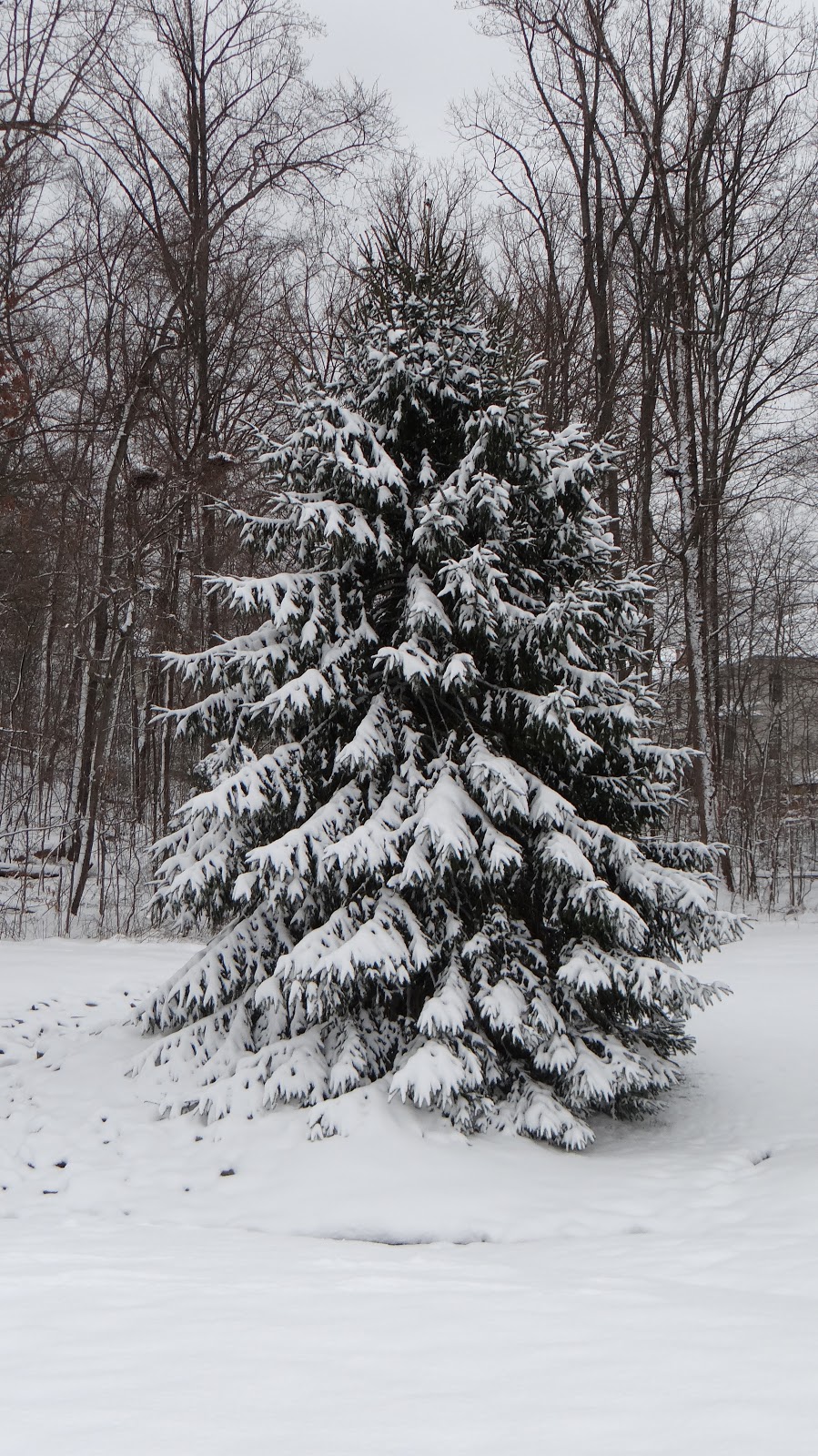
Two of the strongest memories from my early childhood are the muddy yards and roads soaked into deep ruts by rivers of steady pouring rain and the pristine whiteness of the winter wonderland stillness when the dirt and mud are covered by a blanket of gleamingly white and fluffy snowflakes, blanketing snow glittering in the bitter and biting cold sunshine, accumulated and piled high above my head.

I could not imagine a prettier color than alpine white in the majestic Carpathian Mountains set in a wild and rocky terrain ringed with blue-green spruce.

Our snow at Christmas in grandpa’s yard was stained red with the splashed blood of the sacrificed pig raised to feed our entire extended family that otherwise would starve.

My memory brings back the red poppies in the fields of green and yellow wheat, guarded by a man armed with an axe; he meant business when he chased kids trampling government wheat in search of the bountiful and beautiful flowers that had more “useful purposes” to the guard’s communist bosses. The bright red was inviting us to pick them and take them to our moms to add a splash of color in the otherwise dreary and utilitarian grey space we called communist apartment homes. Picking wild flowers in a small bouquet was such an innocent delight which flooded my eyes with God’s beauty.

A sea of red hammer and sickle communist flags dominated the landscape when the population was forced out into the streets, rain or shine, to march in praise and glory to the dear leader and his wife.

Yellow and white were the fields of chamomile flowers we picked and dried to make tea, a soothing greenish liquid that relaxed us at night and helped clean infected wounds.

Our uniforms were plain shades of green, grey, brown, and navy. For a proper contrast, our school shirts were blue, freshened in the wash by hand with a cube of blue dye when they faded.  Hands would look blue for a while as we did not have latex gloves to shield the skin while doing laundry.  Girls as young as five were taught how to properly wash clothes.

Our hands would turn chocolate brown when it came time to pick and shell the green casing of walnuts which had not dried completely on its own. The purple plums we gathered for brandy and the juice we squeezed out of grapes in the fall to make wine stained our hands magenta.  

We cried crocodile tears when the pungent and juicy yellow onions had to be pulled by hand from the ground. We dug potatoes with a hoe and brown became embedded under fingernails for the duration no matter how much we washed our hands. The smell of fresh dirt and the worms we dug up with the potatoes was overwhelming. When it rains and the first drops fall on dry dirt, the smell reminds me of digging up potatoes from the soil which we then spread evenly on the floor of the cellar to dry up.

Grandma’s flower garden blossomed in summer and autumn with fragrant roses, dahlias, narcissus, tulips, chrysanthemums, lilacs, peonies, and lavender.  She was proud of her garden located close to the cast iron water pump that brought fresh ground water from the deep well. I helped by pumping enough water to nourish her precious blooms twice a week. Grandma and mom looked at the plants as God’s colorful gifts that filled the soul and eyes with beauty. The colorful and scented blooms were mom’s treasures.

Grandpa gave me a box of watercolors one year and, without consulting mom, I painted a small red rose on the wall by the couch where I slept. Each morning, when I first opened my eyes, I saw the rose.

We did not have any paintings or pictures on the wall except my parent’s oil portrait from their imaginary wedding. It was a fantasy wedding portrait as they were too poor to have a proper wedding and a formal dress. I wish I had that painting today! It had been long confiscated by God knows who.

Nature’s colors amazed me and I often dreamed that someday, when I could afford to, I would never wear anything else but bright colors, teal, pink, purple, lavender, grass green, magenta, orange, white, and reds.

I often wander in the woods to capture on camera nature’s palette. Fall is a symphony of yellows, browns, greens, and maroons that take my breath away. My husband laughs that I must have photographed the same trees for the last ten years but to me, each autumn brings another shade of color that I have not seen before with my naked eye. And the sun adds that little sparkle, a glint of gold, orange, pink, and cerulean blue streaking from the soft white clouds.

The fragrant green fir trees at Christmas and the tiny real candles we lit, the few glass ornaments, brought a warm glow of yellow light, joy and color to our otherwise drab existence.

One summer mom bought enough material for a new dress. It was not often that I got a new dress. Everything had to be altered, let out, let in, and hemmed to last several seasons. The print was small red roses with green leaves set in a black background. My seamstress aunt‘s masterful fingers created a work of art without a paper pattern. Every time I wore it, the splash of color made me feel special and I rode on a cloud of happiness all day, bathed in the hues of red and green.

My wardrobe today is an eclectic splash of cheerful and sunny colors. It’s not hard to find me in a crowded airport. To me, black is for somber occasions and funerals; navy is ceremonial; and brown is best served in dark chocolate.

The whiteness of snow is still so pristine that no garment can possibly match it. But I wear white long after Labor Day, a bright spot in a crowd of winter.

Thursday, March 17, 2016

The Bright Colors of Freedom

Nature's palette Wikipedia
The shelves are bursting at the seams with colorful merchandise. Spring is here and there is something new for everyone’s budget, no lines anywhere. I picked my favorite color, teal, and took it to the cash register. The young man, a Millennial no doubt, smiled and casually asked me if I liked bright colors.

How could I explain in a sentence or two to this child of abundance, who’s never suffered for anything in his life, who always finds stores full of delicious food and beautifully crafted merchandise from around the world, that life has not always been the same for millions and millions around the world, and it can turn ugly here too if people made bad political choices? Would this young man truly understand poverty and exploitation of the human body and spirit by a handful of elites?
I explained briefly that, to this day, I own very little navy, black, brown, or grey, the traditional colors offered to us as part of school uniforms for twelve years and as very limited choices in stores for everyday clothes.

Every family member had one outfit which he/she wore every day for the entire week and, it was laundered on Sunday if water was running that day and if we could find detergent or Cheia soap, an unpleasant-smelling and caustic soap that lasted a while and turned our hands red and cracking from the hand-scrubbing. If we were lucky, we had hot water on Saturdays for our weekly luxurious baths after hunting for days for bath soap and shampoo, eventually buying them on the black market at ten times the price.
He would not understand how much people were so starved for color, in the granite dirty grey environment built by the communist regime; he would not comprehend that people picked colorful materials and made dresses that seldom matched anything else in their scant wardrobe. It was a splash of color, of daring to live and enjoy life vicariously through brightness, the light and color that was denied and missing in our lives, suffocated by the communist regime and its totalitarian control over every aspect of our existence.

We envied our neighbors Hungary and Bulgaria, even the Russians for their more abundant lives. If we were lucky to get a permit to travel there, we felt like we arrived in the land of elegance and plenty, that’s how bad we lived by comparison.  We bought color at random, pairing pink with red, purple with green, and other seemingly clashing colors. It’s not that we did not know the fine art of matching; we just wanted to have the entire color palette in our lives, not just drabness.
And I was told that, after I left in 1978, the Ceausescu regime turned so much more brutal that the 1980s were described by Dennis Deletant as a time period when Romania had been reduced “to an animal state, concerned only with the problems of day-to-day survival.”

The ideological repression was so bad that, one of my cousins, who was in line at Otopeni Airport to board a plane for a crew job in the Middle East, with passport, visa, and plane ticket in hand, was pulled minutes before boarding and told that he could not go because he had a cousin in America – guilty by association and by birth with me, the “big capitalist.”

I have a bright wardrobe today that expresses my carefree spirit. I can go for a week or so and not wear the same outfit twice. That is because I can find a job, the pay is competitive based on qualifications and skill, not a flat low and equal pay as we used to have under communism, and there is competition for goods and services that makes supply meet the demand from consumers, and prices are relatively low.

This young man would not understand the night and day difference between my life under socialism and my life today under a relatively free market economy; most Millennials are economically illiterate. They just repeat ignorant slogans they’ve been taught in school by their socialist professors with an agenda, with no reflection on truth and reality whatsoever.

I guess I am not a wardrobe minimalist and will never be. Teal, pink, bright green, bright colors, light, and sunshine will always be the center of my life. When you spend the first twenty years of your life in drab grey and dirty surroundings, pollution, and darkness of spirit, you want to live in Floridian colors for the rest of your life, in bright hues and in free spirit, basking in the sun, white sand, salty ocean surf, and the scent of freedom.