Showing posts with label Sarasota. Show all posts

Sunday, November 4, 2018

Politics at the Beach

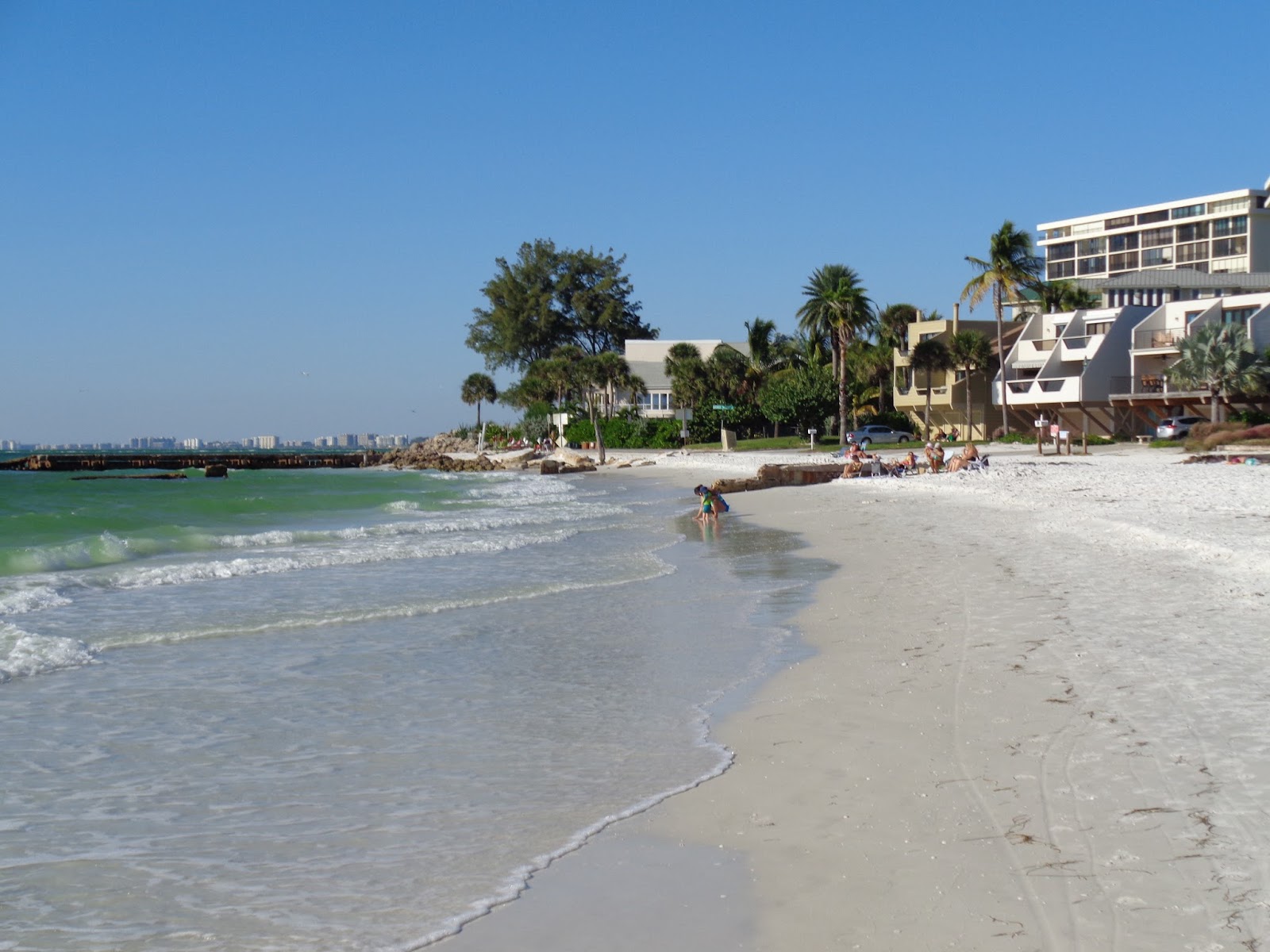
Beach road to the left
Photo: Ileana Johnson 2018
I was hoping that I could get away from politics during our vacation and just enjoy the beach, the white sand, the sea gulls, the dolphins, and the Floridian sunshine. But politics hit me in the face in one form or another in this area overflowing with snow-bird Democrats from New York, New Jersey, and Ohio.

Last year NGOs used young, beautiful, and half-clad women on the beach to advocate for legalizing marijuana.  This year we were assaulted by greens urging naïve pedestrians in affluent areas to fill out questionnaires to save marine life. Tugging at their heart strings, it was an easy sell for donations to various environmental and conservation groups. 

Waiters and restaurant owners had replaced plastic straws with paper straws – glossy and expensive signs “educated” us at each table that drinking without a straw each time saved a turtle.

One day a mature and well-preserved lady with her husband was high-fiving an elderly New Yorker wearing a blue t-shirt with her favorite candidate for Florida governor. They told her, they were very eager to vote early as well for the same candidate.

I muttered under my breath the word “commies;” the couple heard me and replied that they hoped I could not vote. Tangling with total strangers who have no idea what communism is or how awful it was to live under the communism they yearn to bring to this country was not my idea of fun on vacation. But I am not one to back down from an argument with useful idiots who argue and vote for their own demise. The rich ones think that the scourge of communism will somehow bypass them only because they are “enlightened-thinking” Democrats who deplore their opponents with divergent opinions as Neanderthals with pea brains.

As Project Veritas latest video release revealed, there is nothing American about this particular campaign, just a run of the mill progressive (read communist) assault on a “cracker” state as one of the campaign staffers said in the video. https://www.youtube.com/watch?v=di3WRRHRWlE&feature=player_embedded&fbclid=IwAR20L4DZ4j11AVtvISueOJx6wTl6MONZ5zIum4AAYNjrsNUWNzZPcCvw4-w

Often the longest and most protracted political battles are the local ones. One determined resident managed to get on the ballot the three-year long battle over access to a beach road that had been opened to the public for decades but one hurricane had blocked one small section and that gave the city planners the idea to give that section to a rich developer who was planning on building high-rise condos that could sell for mega-bucks. He mentioned that one nearby condo had sold recently for $4.5 million.

The locals had been up in arms fighting to keep this beach road open to the public. Beach-goers contribute large amounts of revenue to the local economy in the form of tourist taxes, hotels, restaurant meals, and other vacation amenities.

 
Mike's rocky strip where he plans a wooden pier for walkers
Photo: Ileana Johnson 2018
 
A local man, who, by his admission, cannot even afford to live near this beach, had bought a small rocky strip of land jutting out into the ocean. Mike flies the American flag proudly and lowers it every afternoon at sunset in a moving ceremony.  A carpenter by trade, he told me that he had spent close to half a million dollars in legal fees to defend everybody’s right of access to the beach, but especially the handicapped. This particular access is very close to the beach, a few steps to be exact.

 
Mike lowering the flag at sunset with Dave
Photo: Ileana Johnson 2018
 
One single handicapped parking spot is now covered by a mound of sand. That is another minor battle as the mound had been sitting there for a while. The plan was to spread the sand on the eroded beach but turtle nesting season was in full swing and the county was waiting, irritating the nearby condo-owners who wanted an unobstructed view of the ocean.

On October 31, the top layers was spread but the bottom part of the mound would have to be taken away to be used in construction since the scraping of the bucket would contaminate the sand with asphalt thus rendering it unusable for the beach.

In a soft but determined voice, he told me that he used to bring his mother to the beach in a wheelchair every sunset until she passed away. Not having children and a family of his own, he wants to leave this strip of land to the public trust in perpetuity so that people could enjoy the ocean. He plans on building a wooden platform on the rocks to allow wheelchair access to the handicapped and to our veterans. He hopes that on Tuesday, the voters will resolve the fate of the beach road in their favor.

The voters will decide on the charter amendment to preserve county-owned parks, preserves, beach and water access and waterfront vistas (ordinance no. 2018-036). Currently the Board of Commissioners has the authority to sell any county-owned property and to vacate roads and rights of way.

“The amendment would prohibit the county from selling or giving away any county-owned parks and preserves, and prevent the county from vacating any road segments or rights of way along any beach, river, creek, canal, lake, bay, gulf access or waterfront vistas." https://www.scgov.net/government/communications/county-charter-amendment-summary

 
Scooter of the Beach
Photo: Ileana Johnson 2018
 
A local celebrity resident, Scooter of the Beach, has been giving video reports on social media daily for the last three months about the status of the red tide bacteria which killed so much marine life, turning water brown, red, or dark green, and causing respiratory irritation and cough on the beach, affecting tourism this summer on a 100-mile stretch.

“Red tide is a common name for a worldwide phenomenon known as an algae bloom (large concentrations of aquatic microorganisms—protozoans or unicellular algae) when it is caused by species of dinoflagellates and other algae. The upwelling of nutrients from the sea floor from massive storms is most likely the cause of these events.”

But locals blame red tide on individual fertilizer use and others on the discharges into the ocean of byproducts from a sugar plant.


Sunday, October 23, 2016

Beach Politics and Siesta Key

Siesta Key
Photo: Ileana Johnson 2016
The ocean surf, the blue waves crashing onto the sugary white quartz sand, and the lush vegetation and marine life make this beach the most beautiful in the world. Silver streaks sparkle in the crystal clear water carrying crushed sea shells to the shore. A pod of dolphins are playing close to shore at sun rise, to the delight of walkers.

The water is teeming with life, from algae, to sand sharks, to jelly fish, stingrays, sharks, star fish, sea gulls, pelicans, and amazing sea urchins we call sand dollars.

A sudden wind gust picks up a few kites and speeds sail boats gliding on the surface. Fine white sand, skimming like a shimmering shallow river over the ground, covers everything. A brave girl is paddling a board past the sand bars.  The sea gulls are diving for fish in the surf, resurfacing with a squiggly silver morsel.

Photo: Ileana Johnson 2016
 
The wind just picked up my umbrella, resting momentarily at the edge of the ocean. I’ve never seen my hubby get up so fast to stop its rolling into the water.

An elderly man is pushing his wife through the shallow water in a wheelchair with large tires. The occasional wave crashes and splashes salty water onto her face; she giggles like a little girl. That sound is the sigh of sheer joy and devoted love.

An Indian family has already brought their mom to the edge of the beach. Her slow gait with the help of a cane is steadied by her daughter who settles her into a folding chair and rolls up her pant legs so she can feel the water lapping at her feet. The daughter brings out a large hat to shield her eyes from the sun.

Siesta Key beach
Photo: Ileana Johnson
 
I seldom see American families bringing their elderly and handicapped parents to the beach; they must be at home or in a nursing home. I feel ashamed and sad.

Clear water and white sand
Photo: Ileana Johnson 2016
 
The beach seems more culturally alive this year. I hear many languages around me, Russian, Italian, Polish, German, Dutch, and French. For the first time in 37 years I see a woman clad in a full beige burka, accompanied by a man in cool and comfortable swim trunks.

Jose Jimenez
Photo: Ileana Johnson 2016
 
I pass every morning by a homeless man, nicely tanned, reading his paper on a picnic table, surrounded by gallons of water, his worldly possessions in a backpack and a couple of garbage bags; his blue beach bike is leaning nearby. He is always smiling from above his readers, makes eye contact, and says good morning to me.

People pass him by as if he is invisible and part of the landscape. A squirrel jumps on the table. There is a short wooden fence behind him, with heavy vegetation and shady trees between the walkway and the beach, and the squirrel runs along the top tier, within inches of his head, as if he is a familiar fixture of the environment, totally unafraid of him.

I make a point to talk to this man and to find out more about him. He is tanned and looks healthy. His name is Jose Jimenez and has been a resident of Florida for 36 years, 20 years in Siesta Key. His English is very good and speaks with a lovely Colombian accent. He greets me every morning with, “every day is a holiday.” This middle-aged man has touched my heart in so many ways; it is hard to put into words. I did not dare ask him if he was homeless by choice or by the vicissitudes of life. He posed for a picture and smiled with his eyes and happy heart.

Live urchins (sand dollars)
Photo: Ileana Johnson 2016
 
A few pelicans have flown further down the beach, closer to the rocky pier.  The large boulders flanking the pier have disappeared one day, moved by a construction company, eager to start building more private condos despite the local voters’ vociferous pleas to keep the road and the beach public. The issue will be voted on this November 8.

Siesta Key beach sunset
Photo: Ileana Johnson 2016
 
Sarasota across the bay from Siesta Key
Photo: Ileana Johnson 2016
 
Paradise on Siesta Key beach
Photo: Ileana Johnson 2016
 
The beach is relaxing and soothing, problems and politics seem to fall by the wayside, but do they? There is always an emergency that needs saving humanity from its own demise, or saving nature from the destruction of all powerful humans. Thank God for the anointed few who know what is best for the rest of us and keep the crony government machine well-oiled and running.

Polar bear sculpture that took a man 3 1/2 hours to complete (Siesta Key beach)
Photo: Ileana Johnson
 
This sign appeared all over Siesta Key
Photo: Ileana Johnson 2016
 
I bumped into the “Save the Siesta Sand” project by chance and curiosity led me further.

A barrier island located on the west coast of Florida in Sarasota, Siesta Key was named the number one beach in 2011 and number one in the U.S. in 2016. “With 99 percent quartz as its sand, it truly is the finest, whitest sand in the world. It does not heat in the summer and it feels like talcum powder on your feet.”

The Army Corps of Engineers and the City of Sarasota have produced a dredge plan which “proposes to remove initially almost 1 million cubic yards of sands from the protective ebb shoal of Siesta Key located in Big Sarasota Pass.” The entire plan calls for “the removal of almost 5 million cubic yards of sand. It is so much sand that it could completely bury about four Empire State buildings laid on their sides. Alternatively, imagine 27 large dump trucks removing sand, running every day for 50 years.”

The sand will be used to re-nourish Lido Key beaches and to build a 5’ berm of sand along its shores, which are private beaches. According to Save our Siesta Sand, “A berm made of sand on a coastal beach and only one side of an island will be useless and will not protect St. Armand’s from flooding. In a little more than a year after the dredge, the North Lido beach has almost been lost and no mitigation is planned.” https://www.youtube.com/watch?v=sdwmVatfkYc

“Consider the planned dredge of the protective ebb shoal off Siesta Key. No one can predict whether this same amount of erosion will occur on Siesta beach but it certainly seems likely. Observable facts speak louder than models.”

Following their modeling, the Army Corps is moving on with their plan, ignoring the “repeated requests by environmental organizations and the County Commission to generate an Environment Impact Statement before proceeding any further with their proposal to dredge Big Pass, New Pass, and Longboat Pass. Instead, they are issuing a FONSI (Finding of No Significant Impact) by this massive project of navigation, the environment, and Siesta Key.” http://www.soss2.com/

To protect the Siesta Key beaches after this massive dredging of sand, the government is proposing the construction of “beach erosion groins,” but don’t worry, they will be tastefully decorated to disguise their ugliness.

In the meantime, as I enjoy the lovely Siesta Beach, I worry that in the future, our children and grandchildren will no longer be able to see the beauty of this island, a paradise on earth threatened by a 50-year government project of “unprecedented scale that has had no public hearings and where the proposer cannot show any similar projects that have met their goals. One independent review that was held stated that they were unable to verify the claims of the proposer.”

Politics at the beach are complicated in the best of times. For now the ordinary beach goer and modest business and home owner on Siesta Key are afraid that they may lose their white sand, spectacular beaches, perhaps the beach flora, and their paradise to the Army Corps of Engineers and City of Sarasota dredge plan.


Sunday, October 20, 2013

Sarasota


It’s five a.m. and the bright full moon is casting dancing shadows in the hawkish wind. The dense, tall trees are creaking in the back yard forest with giant limbs swaying. The air is cold and dry; it has not rained in several days.

It’s a far cry from the balmy Florida yesterday. We got up at 6:30 a.m. to watch the sunrise over the ocean. Joan’s cottage is five minutes from the beach. In the salty damp warm air, the street greeted us with pitch blackness. The island has no street lights. The only ambient light comes from the moon and the stars and they were not providing much brightness. Our eyes adjusted to the dark and we walked in silence. I could hear the small geckos scatter in front of our feet. They were everywhere, like tiny beige Velociraptors. The lush tropical vegetation, especially the clustered and dense palm trees secluded any possible light coming from homes nearby. Many were shuttered for the winter season.

I did not see any Palmetto Bugs, the lovely euphemism given by Floridians to huge cockroaches but I cleaned their unpleasant presence in the shower and in the kitchen. I was busy vacuuming for a little while when we first arrived. The cottage had been closed for five months. While in the back yard, I saw a beautiful green snake slither between the tall grasses and the crushed sea shells. I could not search anything to see if it was poisonous or not. We had no Internet, no radio, no television, and very poor phone reception. We were not cut off from the world but it felt this way, not being tethered to some instantaneous form of communication. After a while, we got used to it and enjoyed life more and each other’s company.

It is October but the temperature was 88 degrees every day in Siesta Key. The ocean water was a balmy 82 degrees. We made our way to the beach groping in the dark. The damp sand felt soft and velvety under our feet. There was not a soul anywhere, just the thunder of the waves crashing into the rocky pier nearby. Erosion is a problem – large boulders and a rocky pier control some of it.  A curious and unmoving crane perched on a rock is peering at us in the darkness.

We started walking in silence along the shoreline; the sun will rise on the left at 7:24. It was pointless to shoot pictures – it was too dark. Here and there flocks of sea gulls were still nesting noisily for the night. They did not scatter when they saw our shadows approaching. Waves lapped at our bare feet – I was surprised by the warmth of the ocean so early in the morning.

The tides left pools of water on the beach during the night. They will evaporate when the sun comes up. Small globs of jelly fish pick up the light. A ring of newly abandoned shells follow the shore line. Sea weeds and curiously long cucumber-like plants are scattered along the way. We walked for a good half hour before a tiny sliver of light emerged. Slowly, the sky changed color, becoming a milky dark grey, then hues of dark blue, light blue, and finally rays of pink fanning across the sky, breaking through the dark blue like projector lights on nature’s stage. The ocean appeared bluer from its ominous navy darkness.

I imagined the ocean depths teaming with creatures large and small and felt a twinge of tightness in my chest visualizing how quickly a human would succumb to such a hostile environment. Yet it was so beautiful! The sand took on the color of pink. Behind the condos dotting the beach, a dark orange light emerged, mixed with darkness.  At exactly 7:24 a.m. an intense orange orb appeared. I looked around and saw several people walking the beach, searching for sea shells and a lone fisherman, knee-deep in water. The waves were not too fierce. The sea gulls flocks took off now when more humans approached. The crane was gone. I took pictures of the beach saturated with color. The fascinating palette flooded my eyes with shades of gold, yellow, pink, orange, and blue.

On our way back, we stopped at the Broken Egg, our favorite outdoor breakfast café, where they make the best omelets and a famous buttermilk pancake the size of a huge plate. If it is a place where locals line up to eat and have their favorite table, I know the food is delicious and cheap.

I must not forget Captain Curt’s crab and oyster bar, the first place winner for the best New England clam chowder competition that took place in Newport, Rhode Island. It was delicious! The place was hopping with locals and tourists every night.

The day before, while frolicking in the emerald green crystalline waters, I stopped in awe and fear when three small sting rays gently glided past me in the ocean. All I could think of was, please don’t flip your tails. I encountered fish of all sizes, glittering silver in the waves. One blue mid-size fish, resembling a marlin, swam slowly close to the surface; he appeared to let himself be carried by the warm surface currents.

I could not tell that thousands of miles away tropical storm Karen was brewing. Once in a while I felt a cold current bathing my feet. On our last day, the ocean became furious and agitated, the perfect time to surf on the tall waves. We were alone on the beach, a bit cloudy at first, a lone surfer watched like a hawk by the lifeguard on duty. A five minute quick rain drenched us while we sat in our chairs watching the surfer battle the waves. The sun came out, everything dried and the rest of the day was lovely, snoozing by the sound of crashing water with this paradise all to ourselves.

Siesta Key was voted number one beach in the country in 2011. Why travel to faraway lands when we have such a fantastic jewel in Florida?

Florida was the best acquisition to the United States string of pearls. According to the 1819 Adams-Onis Treaty, Spain ceded Florida to the United States for $5 million and the promise that America would renounce any claims to Texas that they might have had from the Louisiana purchase. Alternately, the Spanish, the French, and the British ruled over this strip of heaven.

But Sarasota and its keys, with the most beautiful beaches in the country are its Tahitian pearls. The dunes, the tall grasses, the sugar white sand, the emerald green waters, the balmy climate, and the lush vegetation blooming year round make it one of the best in the world.

According to some historians, conquistador Ponce de Leon named the peninsula in April 1513, La Florida (flowery land) because of the Spanish Easter Season named Pascua Florida (Flowery Easter). The lush vegetation was in bloom at the time when he landed. From 1630 through the 18th century, La Florida was also known as Tegesta, after the Tegesta tribe, as it appeared on a Dutch map of cartographer Hessel Gerritsz.

Sarasota is a retirement heaven judging by the numerous hospitals and clinics everywhere. It was not the height of tourist season, some stores were closed for fall, but many were empty, victims of the terrible mismanaged economy of the last four years.

The Lido Beach area in St. Armands Key was hopping with rich tourists, some speaking Arabic, and a wedding party; a lovely couple had just tied the knot on the beach at sunset. Year-round rich locals come out in the evening in the Harding Historic Circle for a promenade with their leashed dogs or in infant strollers and to have dinner at their favorite European style cafes. Our eating experience at the four-star restaurant Crab and Fin was a disaster.

St. Armands Key was an oval shaped, 150-acre uninhabited island when John N. Ringling (1866-1936) purchased it in 1923. Ringling planned a community of expensive homes with a central park. The Harding Park was named after his friend, President Warren Harding (1865-1923).

St. Armands was opened in 1923 when the bridge to the mainland was completed. Mediterranean and Spanish style homes were built after 1945 and more residential and shopping areas were developed later.

I learned that on January 16, 2001, Harding Circle with its associated medians and boulevards was placed on the Register of Historic Places for “its unique early planning and development.” The residents view this designation with pride and accomplishment.
 

The area is now dotted with lovely white marble statues, a stark white contrast to the green palm trees and flowering bushes. The Allegory of Sarasota, one cluster of statues representing the seven virtues “conceived and designed by Edward Pinto,” is looked upon with approval by the statue of a benevolent Michelangelo:

-          - Music (representing the performing arts)

-           - Flora (representing natural beauty)

-          Aristotle (representing the local area research and facilities)

-          Sculpture (representing painting and sculpture)

-          Asclepius (god of medicine, representing the many local specialists and clinics)

-          Bounty (representing the richness of land and sea)

-          Amphitrite (wife of Neptune, representing the gulf and bays).

Downtown Sarasota proudly displays a huge statue called “Unconditional Surrender,” created by sculptor J. Seward Johnson, the anonymous kiss between a soldier and a nurse, a symbol of freedom, a celebrated moment in the history of our nation marking the end of WWII. Jack Curran bought the sculpture and, with the help of various Sarasota county veterans organizations, donated the sculpture to the city of Sarasota.

Sarasota was once the winter home of the Ringling Brothers and Barnum & Bailey Circus. The cultural attractions include the John and Mabel Ringling Museum of Art (1927), a 66-acre estate on Sarasota Bay, the Mote Marine Laboratory (1955), Selby Gardens (1975), Van Wezel Performing Arts Hall (1968), Florida West Coast Symphony (1949), College of Art and Design (co-founded by Ringling in 1931) and many others.

But for me, the salty ocean water, the spray, the breeze, the spectacular sunsets and sunrises, the pelicans diving for food, the majestic cranes, sand dunes with native grasses tall and willowy in the wind, the turtle nests, and the snow white sand are the main attraction. I cannot have enough napping by the sea, watching nature unfold before my inquisitive eyes, and playing like a kid in the ocean surf.