Tuesday, September 21, 2021

Reading List for Summer

Every summer our Marxist teachers, prompted by the Communist Party’s Ministry of Education, sent us home with a reading list of classical literature titles as well as the dear leader’s latest propaganda and “enlightened” writings and speeches by the infamous Marxist “revolutionaries” such as Marx, Lenin, and Stalin.

One of the items missing from the dear leader’s list was accurate information about their real biographies, not the lies about their “amazing” ideologies and bloody struggles.

These Marxists left in their social activist wake, in their effort to bring about communism to the masses, a false and miserable equality that killed people’s spirit, their freedom, their pride, their humanity, robbed them of their wealth, and put so many in gulags and mass graves while the “revolutionaries” prospered with confiscated wealth from the millions they killed.

There was no way to research through communist archives and few people were given access to any documents that might reveal embarrassing histories about their Marxist “heroes” and bloody psychopathic social activists.

I did not bother reading the dear leader’s latest propaganda, but I certainly enjoyed the classics. Many books were banned and forbidden reading, and could not be found in the local library I visited but other red-bound tomes that promoted the “class struggle” and other communist propaganda were on the shelves in multiple copies.

The local librarian was a dull and ignorant communist apparatchik who fashioned herself as a learned person. She attended night school because her days were busy with propaganda and snitching on her fellow citizens, friends, and family. Her decaying and yellowed teeth from excessive cheap Carpați cigarette smoking made her look much older than she was. She wore an ugly grey suit with permanent food stains and a lapel bejeweled with a communist red star insignia.

Dry cleaners were hardly accessible or affordable to the oppressed masses and even to government informers like her. She pretended to be my friend to get information on innocent people that she could then turn in for extra cash or other rewards. But I had her number while pretending to be naïve.

I borrowed so many books, four at a time, from my summer list and read insatiably. I wanted to know as much as I could about the real world outside of our heavily guarded borders with menacing soldiers told to shoot anybody on site if they tried to cross without authority or in the dead of night. Our communist world was a prison that kept us locked in.

I found a cool place to read, away from noise and interference with my daydreaming. That place was under a lone small apple tree at the edge of a wheat field, not far from our concrete apartment complex. I could stop reading for a moment, raise my eyes to the clear blue sky and imagine my journey to a fascinating place, an impossibility over time, space, or tightly guarded and latched borders. Freedom existed only in my imagination which could carry me anywhere if I read the right kind of book, the magical carpet to amazing places.

At Maita’s house in the mountainous village, in the green grass in her orchard, under the plum or quince trees, I could lose myself in the pages of amazing books and fly away on imaginary trips to faraway places. At lunchtime her voice and the smell of cooking from the outdoor summer wood-burning stove brought me back to reality.

Surrounded by buzzing bees, the occasional chirping birds, the gentle breeze, sunshine, and the blue and green mountains, I was in my own garden of Eden. And I learned that freedom existed outside of our heavily guarded borders and people were happy, and the “evil” and “dangerous” capitalism allowed people to live much better lives than we did under the socialist boot of the Communist Party who filled our heads with daily propaganda and lies. I knew then that I had to escape.


Wednesday, September 15, 2021

The High Line and the Rotary Snowplow


A small park in Breckenridge is dedicated to the railroad workers of the South Park Line who kept the rail line operational from 1873 to 1937, a feat that required backbreaking work and sacrifice under harsh weather in winter – bitter cold, high winds, tall mounds of drifting snow, and avalanches. Brave railroaders fought the severe weather all winter long.

The winter days were so cold that, despite doubling up on wool underwear, shirts, pants, socks, coveralls, and jackets, by the end of the day, all clothes were frozen on the rail workers’ bodies. Returning home from a day’s work, men had to stand by the fire to thaw out before their wives were able to peel off their frozen clothing.

The Summit Historical Society in Colorado preserved amazing photos of the difficult snow weather conditions when the train and its huge rotary plow was covered in snow and frozen over. One photo shows an engine and the bucking plow at Kokomo in the Ten Mile Canyon, around 1915.

There were many things that could derail the train and cause horrible accidents in the middle of a gale and snow, when visibility was low – packed ice, snow, and rocks.

Archive photo of 1915

In blinding conditions, train engineers used a “bucking” or “butterfly” plow like No. 9 to push through the high snow drifts. When the engine stopped because of the high drifts, the engineer uncoupled the engine from the train and charged the drift, reversing the engine and “bucking” until “he rammed his way through.” According to the experts, the “bucking” required skill on the part of the engineer; if he did not back up fast enough, the engine could stall.


Railroaders were a tough bunch. They could not communicate with their dispatcher, they were on their own to extricate themselves from mountains of snow and ice, clear the track, and keep the train and the line moving. And they had one tool that helped them fight avalanches and tall drifts on Borcas Pass and Ten Mile Canyon, the “High Line” – the rotary snowplow.


The 108-ton rotary engine snowplow required six or seven “smoke-belching locomotives” to help propel it forward while the blades worked like a modern snow blower, blasting snow up to thirty feet on both sides of the railroad tracks.


According to the Summit Historical Society, the snowplow required four people to operate it – the pilot, the engineer, and two firemen. “The pilot sat in front, behind the blades, where he had a clear view of the track. Over the roar of the engine and blades, the pilot used whistle signals to communicate with the engines pushing the rotary.” Because the noise was so deafening, the pilot and the engineer communicated using bells and hand signals. I wonder how quickly this crew developed deafness from the high decibels, particularly since each shift lasted twelve hours.


The weather was so rough, the plow’s doors would ice-shut and had to be pried open from the outside. The rotary plow would be overwhelmed by snow and stop. During such time, “snow diggers” (“snowbirds”) would shovel the soaring drifts by hand, bringing the snow’s height to the height of the plow so that “the rotary could resume chewing through the snow.” These snow diggers lived in box cars, going wherever the rotary plow went.

One engine of the rotary snowplow

Railroad water bucket

Travel across the nation has come a long way since those times. Humans have always used ingenuity to beat the harsh weather and terrain in their quest for mobility. Americans have always loved the open roads and the rough weather never stopped them from their quest to go to impossible places and rarified heights.


Monday, September 13, 2021

Labor Day Trip to Colorado


I have enjoyed enormously our last trip to Colorado, and it wasn’t just the breathtaking vistas of rocky mountains, dizzying drops, and majestic mountains 14,000 feet tall.

The red eye flight to Denver was uneventful and the drive to the suburbs took us again past the infamous blue bronco statue with red eyes, a stallion standing high and alone in the middle of a hay pasture. Another statue of two eagles stood deceptively on the side of the interstate, fooling us into thinking that they were real.

Breckenridge

The blue spruce, evergreens, and aspens colored our days with a palette of blues, greens, and white contrasting starkly with the vividly blue sky, sunshine, cold lake waters, and furious rapid waters the size of creeks carving into the mountain or running over rocks and boulders standing in the way.

Lake Dillon is a man-made reservoir that provides fresh water for the city of Denver and is in Summit County, south of I-70 and bordered by the towns of Frisco, Silverthorne, and Dillon. It has 18 moderate trails at an altitude ranging from 9,025 to 13,845 feet above sea level. At the bottom of the 79 ft. deep reservoir, fed by the Blue and Snake Rivers, rests the old town which was flooded after the population was relocated for the third time (1961-1963) and the dam built.

Vail slopes at above 11,000 ft.

We picnicked high above its rim, with breathtaking views of white sailboats floating gently on the deep blue waters. We accidentally crashed a country wedding taking place at a scenic view stop along the trail. The sun was bright, the humidity low, there were no bugs disturbing our lunch, and the trail lead us higher and higher along a dizzying drop with evergreens jutting from the ground here and there. One strange buzzing insect could be heard in the bushes and a lone chipmunk came out briefly to get some sun.

Lake Dillon from above

Rubber duck race in Breckenridge

Not the least entertaining was the rubber duck race in Breckenridge when thousands of competitors paid a fee to float their numbered yellow rubber ducks down the creek in hopes that they would win the coveted $1,500 prize. The rest was sheer fun and excitement among both children and parents who brought them there. My oldest grandson managed to fall in and wet his hiking boots and socks while the other grandson was upset because he did not get to fall in like his brother.

Snow plow in the former Breckenridge train station

The Breckenridge train station celebrated the steam engine that plowed its way through mountains of snow and through transportation history. Civilization could not have existed without the rail and the steam locomotive.

The hues of green and blue mountains were tinged with armies of white barked aspens, digging their roots only 12 inches into the ground but connecting to each other like an army of electrically connected strings of Christmas lights. When one aspen falls, they all do.

The 3 a.m. trip to the ER due to acute mountain sickness (AMS) allowed me to experience the next day the beauty of Vail in a climbing gondola and in the company of family I cherish.

However painful it was to wake up at 2:30 a.m. out of breath and with an excruciating headache and nausea like I’ve never felt before, my eyes were wide open watching the myriad of twinkling stars outside our window, so close and perfect that I felt that I could have extended my hands and touched some of them.

Vail at 11,00 feet

Stops in Frisco, Georgetown, Evergreen, and Idaho Falls, a lovely western-style town from a by-gone era when energy was provided by a water wheel, completed the journey. I even found minerals for my grandson who has a fascination with faceted minerals, rocks, and walking sticks. To him pyrite is not just fool’s gold, but a shiny sample of the magical inner earth hidden under the majestic beauty of rocks, luscious and thick forests of evergreens and aspens, and cold-water creeks and rivers.

Sunday, August 29, 2021

I Am Numb and Angry

I am numb that I left my country to find freedom here and now, in my old age, it is taken away by Marxists again. I am so angry that words cannot describe my disappointment with Americans!

You are taking your good life and great country for granted and are now busy destroying it. What is wrong with you? Can you not learn from history, from the rest of us who lost everything to escape oppression?

Are you that bored with abundance that you must conjure up an imagined oppression in order to destroy your own country?

Shame on all of you who participate in this painful and disgusting charade, pretending daily that nothing is wrong, Joe is normal, and turning your backs to all the lawlessness and criminality.

Friday, August 27, 2021

Freedom of Speech, Just an Illusion?

I have been asked about the freedom of speech in my country where I was born and raised and how it compared with the freedom of speech we have in America. Is it just an illusion on paper under constant attack from the Marxist left which controls the country?

When Americans exercise their freedom of speech guaranteed in the Constitution, social media bans them under the rubric of “violation of their community standards.” Those standards must be very curious as Taliban jihadis are allowed on social platforms while conservatives and a former president are not.

The U.N. Declaration of Human Rights, which was adopted in 1948, states in article 19 that “Everyone has the right to freedom of opinion and expression; this right includes freedom to hold opinions without interference and to seek, receive and impart information and ideas through any media and regardless of frontiers.”

The actual paragraphs of art. 19 are as follows:

1.      Everyone shall have the right to hold opinions without interference.

2.      Everyone shall have the right to freedom of expression; this right shall include freedom to seek, receive and impart information and ideas of all kinds, regardless of frontiers, either orally, in writing or in print, in the form of art, or through any other media of his choice.

3.      The exercise of the rights provided for in paragraph 2 of this article carries with it special duties and responsibilities. It may therefore be subject to certain restrictions, but these shall only be such as are provided by law and are necessary: (a) for respect of the rights or reputation of others; (b) for the protection of national security or of public order, or of public health or morals. First Principles on Human Rights: Freedom of Speech | The Heritage Foundation

Paragraph 3 places limitations on the freedom of speech.

George Orwell stated, “If liberty means anything at all, it means the right to tell people what they do not want to hear.”

Adolph Hitler allegedly said, “We’ve eliminated that conception of political freedom which holds that everybody has the right to say whatever comes into his head.”

The communist tyrant Ceausescu employed an army of security personnel and apparatchiks loyal to him who went to any length to squash the voices of those who tried to exercise their freedom of speech as outlined in the constitution.  Those who dared speak against socialism and its ruling communist party were tortured, forced to say, or write down incriminating statements, and jailed where they were eliminated by means that appeared as natural death.

If disinformation against them did not work, the tyrant silenced dissenters by having them beaten within an inch of their lives, “living corpses” as Pacepa wrote. Freedom of speech was just a line-item joke in the constitution.

Lt. Gen. Ion Mihai Pacepa wrote in his book, Red Horizons, that Ceausescu added radiation to his deadly arsenal against those he deemed “inconvenient” who needed their freedom of speech curtailed permanently. He gave the order “Radu” for those slated to be irradiated. “The radiation dosage was said to generate lethal forms of cancer.” (p. 146)

The constitution guaranteed freedom of speech but people were terrified to exercise it even around their immediate or extended family. They never knew who would turn them in for extra rations of food.

How much freedom of speech did citizens have?

None, when one considers the fact that every citizen had to submit a handwriting sample to the authorities and had to register and turn in on demand any typewriters they owned if the authorities deemed necessary that such machines should be confiscated.

None, if one considers that those who were lucky enough to have telephones, the speakers were bugged. Unlike today, when technology does the spying on the population, back then the centralized socialist/communist government had to engage an entire army of spies and informers to curtail the peoples’ freedom of speech and assembly.

Art. 30 in the Romanian constitution today guarantees the following:

1.      Freedom to express thoughts, opinions, beliefs, and the freedom to create anything via speech, images, sounds, or other means of communication in public.

2.      Censorship of any kind is forbidden.

3.      Freedom of the press and freedom to establish publications.

4.      No publication can be suppressed.

5.      The means of communication in mass must disclose the source of finance.

6.      Freedom of expression cannot prejudice the dignity, honor, private life of a person, or their right to their own image.

7.      It is forbidden to defame the country and the nation; to urge war of aggression; nation hate, racist hate, class hate, religious hate, incitement to discriminate, incitement to territorial separatism, public violence; obscene manifestations against good morals.

8.      Civil responsibility for public information falls on the editor, the creator, the author, the organizer of the artistic manifestation, the owner of the means of production of such information, the radio station, the tv station, etc.

According to article 30 it appears that freedom of speech, although guaranteed in words, is not that free at all, it does contain many “caveats,” specific stipulations, conditions, or limitations.

Professor Marius Visovan, a priest, wrote about the anti-communist commemorative plaque displayed at the “Dragos-Voda” high school; because of current political correctness, the leftist way to squash freedom of speech, the commemorative plaque had been removed. It was a painful realization that those who were jailed, suffered, and died during the communist regime “were once again slapped in the face.”

Visovan bemoaned the fact that there is freedom of speech to contest the decisions of current politicians, but nobody seems to listen or is willing to redress the grievances of the population. What good is the stated freedom of speech if people are shouting in the wind?

Through the Memorial of the Victims of Communism from Sighet, Maramures, Romanians are learning slowly what happened to their nation during the communist rule of the tyrant Ceausescu. Why slowly? After 1990, according to Prof. Visovan, with one television station at that time, strongly dominated by neo-communists, with very few independent press outlets, Romanian citizens were clamoring for uncensored information.  

The former political prisoners alive then asked for their rights to express publicly the truth about communism. But the official narrative was still the communist propaganda of four decades prior. Slowly, since the 1989’s revolution and the “fall” of communism, information and freedom of speech are dominated and controlled by the globalist-funded mass media, using the same talking points that America is using today.

I remember my high school history teacher, a Jewish lady, who was eventually allowed to flee to Israel under Ceausescu’s agreement that Jews could buy their freedom in dollars out of the oppressive communism we lived under.

She did not allow us to ask many questions when we studied certain “inconvenient” historical facts that the communist party tried very hard to erase from reality or conceal and misrepresent. She would give us a verbal warning which we learned to heed under the guise of, you are treading in dangerous territory for you. The verbal warning was, “democracy has gone to your heads.”

Her meaning was, that we should not dare try to express orally and in writing the “rights” we had under the constitution which the communist party changed at will, or else we and our parents would be disappeared in the many prisons and gulags the commies had spread around the country. The communist freedom of speech was just a fairy tale.


Sunday, August 15, 2021

Inflation and the Emperor Who Planted Cabbages

Invest in inflation. It’s the only thing going up. – Will Rogers

As Americans are struggling with inflation to pay their bills, buy food, gasoline, and other necessities such as medications and rent, few have the knowledge to point to the culprits of such accelerated overall price increases:

-          - the inept government run by Democrats at the federal level

-          -  the production and supply chain disruption, bankruptcies, forced unemployment, and generous welfare to stay home, all caused by the continuous Democrat lockdowns and political fear posturing over a flu virus

-          - Joe Biden’s disastrous reversal of anything relating to fossil fuel production which escalated gas prices and made America once again dependent on foreign oil supply

-          - the Green New Deal which is destroying the economy

-          - Congress’ out of control spending of trillions of dollars printed ad nauseam, with no  backing up of goods or services

Inflation is an ancient enemy, with its cousin, stagflation, inflation while the economy is stagnating. Inflation measures via the consumer price index (CPI) the rising prices of goods and services which leads to a decrease in the purchasing power of the dollar. The same dollar used to buy a basket of goods today will buy a smaller basket due to rising prices.

The consumer price index (CPI) calculated by the Bureau of Labor Statistics (BLS) uses a weighted average of various goods and services Americans buy, i.e., food, shelter, transportation, doctors, dentists, medicines, and is differently gauged for rural v. urban inhabitants.

The method does not accurately reflect price increases as Americans use some services more than others, and housing costs, healthcare, and education vary from region to region. The CPI calculation methodology has changed more than twenty times and is still not an accurate measure of inflation.

What causes inflation?

-          Consumer demand for goods is much larger than supply, pushing prices of supply available up – see the case of new cars, the supply is much lower due to an alleged microchip shortage, therefore dealers add an average of $5,000 to the price of new cars

-          Increase in supply of money and credit to consumers – the government spending and printing money more freely

-          Price of goods increase because of higher production costs due to higher price of raw materials and higher employee wages

-          Wage push inflation – people expect inflation rates to continue (Federal Reserve target of keeping inflation at 2 percent rate per year) so employers increase wages, followed by increased consumption rates, which pushes prices of goods and services up.

-          Most economists agree that one compelling cause of inflation is the money supply that expands too rapidly, i.e., printing too much money.

The buying power of the dollar declines rapidly during high inflation. A classic example of galloping inflation is the German mark. In 1918 at the Armistice, one mark bought the same amount of goods and services as 726 million marks in 1923, just five years later. Burning paper money was cheaper than buying firewood.

Inflation is not bad for debtors; if you earn $1,000 you may have borrowed five years ago, is much easier. What you pay back the lender, the $1,000 buys less than it did when you borrowed it.

There was a time when breaking the law and causing inflation resulted in the ultimate punishment – death. To be more specific, Roman Emperor Diocletian, to curb rising inflation, devised a set of regulations in 301 A.D. Anyone caught defying his edict was killed.

Emperor Diocletian listed 1,000 items with fixed prices that could not exceed a certain maximum price, i.e., food, raw materials textiles, wages, and transportation. Anyone caught charging more for his listed items or trying to sell their wares on the black market for higher prices would be summarily executed without any benefit of a trial.

How bad was this inflation that Emperor Diocletian was trying to shrink? According to historians, the inflation rate was 1,000 percent during a period of 17 years. Reducing money printing was one way to deal with inflation. The government of that time tried to deal with the escalating inflation by debasing the currency so that instead of coins minted from precious metals, coinage was made mostly of copper.

But, debasing the currency, making it inferior in metal quality was a mistake, it did not go unnoticed to merchants who began to demand higher prices for the goods they sold and to citizens who demanded more wages for their work, resulting in more inflation.

But what caused this galloping inflation to being with? A half century of political turmoil, instability, non-stop warfare with the barbarians, the capture of the previous emperor, Valerian, by the barbarians in 259 A.D. Speculators caused a financial crash in which people hurriedly turned their available cash into goods.

Diocletian’s government failed to put blame on its shortcomings in dealing with “speculators who gambled on grain futures.” It is, however, written in the preamble of Diocletian’s edict, that those responsible were “men who have nothing better to do than carve up for their own advantage the benefits sent by the gods … men who are themselves swimming in a wealth that would satisfy a whole people, who think only of their gain and their percentage.”

Diocletian, a man of low birth, was proclaimed Emperor at the age of thirty-nine by his troops. He found out painfully that he could not reduce inflation by legislation – people, who saw their money devalued again, rushed to stockpile all the goods they could find and afford before their money lost value even more.

The black market flourished, one of the unintended consequences of bad price and income government policies. Emperor Diocletian managed to keep the empire together for a while and was one of the few leaders of that time able to retire and to eventually die in his own bed, a rare feat for emperors. At his villa in Salona, the modern Yugoslav town of Split, he grew cabbages. When approached to return to the life of command, he is alleged to have said, “if you could only see my cabbages, which I planted with my own hands….”

People in our modern economy hurry at times to exchange their available cash for goods they hoard during unstable times of fear and shaky economy caused by terrible government leadership.

Yogi Berra is famously alleged to have said, “A nickel ain’t worth a dime anymore.” Inflation does that to currencies. Of course, you could use the barter system and exchange goods for goods. The colonists used bullets and gunpowder as a medium of exchange and one town famously made money out of rectangles of wood. Colonists also cut up coins to make change, making a half coin worth four bits and a quarter coin two bits.

Cash will eventually become obsolete, replaced by chipped cards, and controlled entirely by government via technology. We are unsure how they would devalue balances to express inflation, but we are certain that they will immediately collect all taxes owed, and unless we do as they say, our electronic balances will be inaccessible to us.

Thursday, August 12, 2021

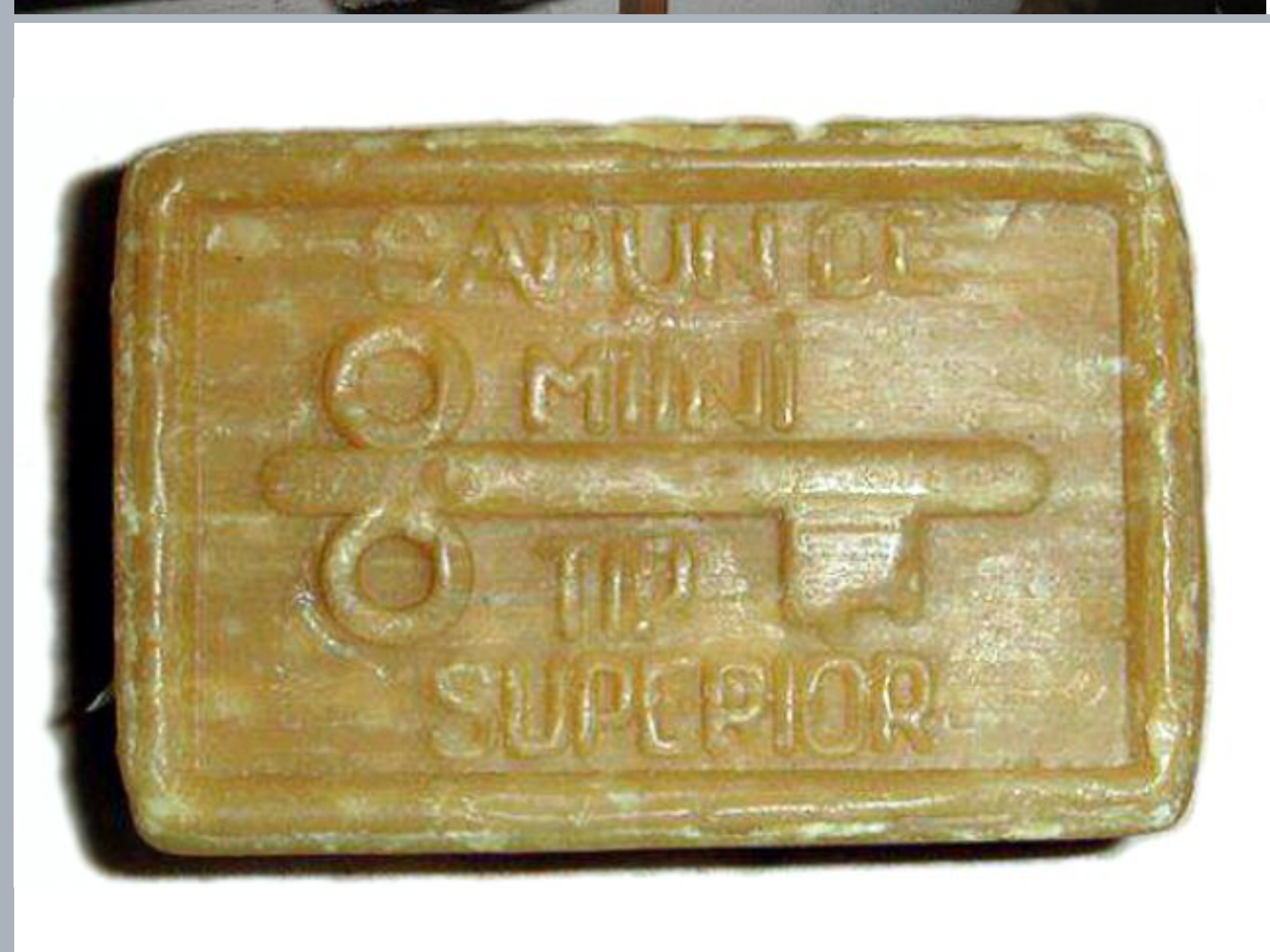
A Soap Bar and a Lesson Missed

I was browsing through L’Occitane one day, looking for a bar of soap. Among the many offerings, I noticed three lovely and fragrant bars which were labeled shampoo soap. The fragrance brought back memories of the factory in Nice, France, which I had visited years ago on a trip to Europe with my students.

Making conversation, always with a teacher’s purpose in mind, I told the young woman helping me that we used to wash our hair in my country with cheap soap made by the socialist centralized economy run by the Communist Party and their only soap available left a nasty whitish residue on the hair shaft, which no amount of rinsing could wash off, and the soap had a distinctive and unpleasant odor. We used the same soap to launder our clothes by hand as we did not have washers and dryers, nor could we have afforded them.

The young woman asked politely curious why we would wash hair with soap, why not use shampoo and conditioner?

When I replied that shampoo and conditioners did not exist in a centrally planned socialist economy, she looked at me in disbelief, as if I had just fallen off to Earth from an alien planet.

I knew shampoos existed back then because I saw foreign tourists using shampoo at the outdoor showers by the Black Sea and the wind carried the fragrance. They came in individual one wash use in red plastic squares, not bottles, quite convenient for travel.

Hotel room cleaners would get occasionally lucky when a foreign tourist would leave behind fragrant shampoo squares and partially used bars of soap. It was better than a monetary tip to take home such luxuries.  

I could see light bulbs trying to flicker in her brain but she could not comprehend such impoverished reality in her abundant and privileged capitalist lifestyle, and that the socialism I escaped from and she worshipped, could deprive people of simple things like shampoo and fragrant soap.

She would not understand the story of a Hungarian friend who visited family for the first time in 1970 in Budapest and could not find socks anywhere. Americans can go to any store and find a myriad of choices of socks to pick from. People living under oppressive socialist planned economies had to learn to knit their own socks, sweaters, gloves, shawls, make their own clothes, or do without. There were not many choices of anything in government-run communist stores.

It was pointless to explain to her that soap and shampoo were the least of our worries, that food and necessities, medicine, and other basics like toilet paper were nowhere to be found unless you stood in line every day in hopes of finding something to purchase that you needed.

Before the lockdown, I had given to one of my doctors a copy of my book, Echoes of Communism, and he did not make any commentary about it. On a return visit months later, when the lockdown was in full swing and the grocery stores were rather empty and imposing limits on many things, the same doctor commented that he finally understood the dearth of basics under communism when his wife went to their local Giant grocery store and could not find basics. He said, they became believers. But, as soon as the supply of food improved, they returned to their leftist worship of the socialist ideology.

The moral of the story is that, unless you suffer the lengthy deprivation and indignities of a socialist economy like Venezuela’s and Cuba’s, you are not going to believe that your abundant way of life that you have under a capitalist economy, will disappear rapidly under a socialist, centrally mis-planned economy, run by one party rule, whose leaders lie to you that everything they do is for the common good and it is the best.